+91 99980 88430 | +91 95589 17778
  info@convello.in | sales@convello.in
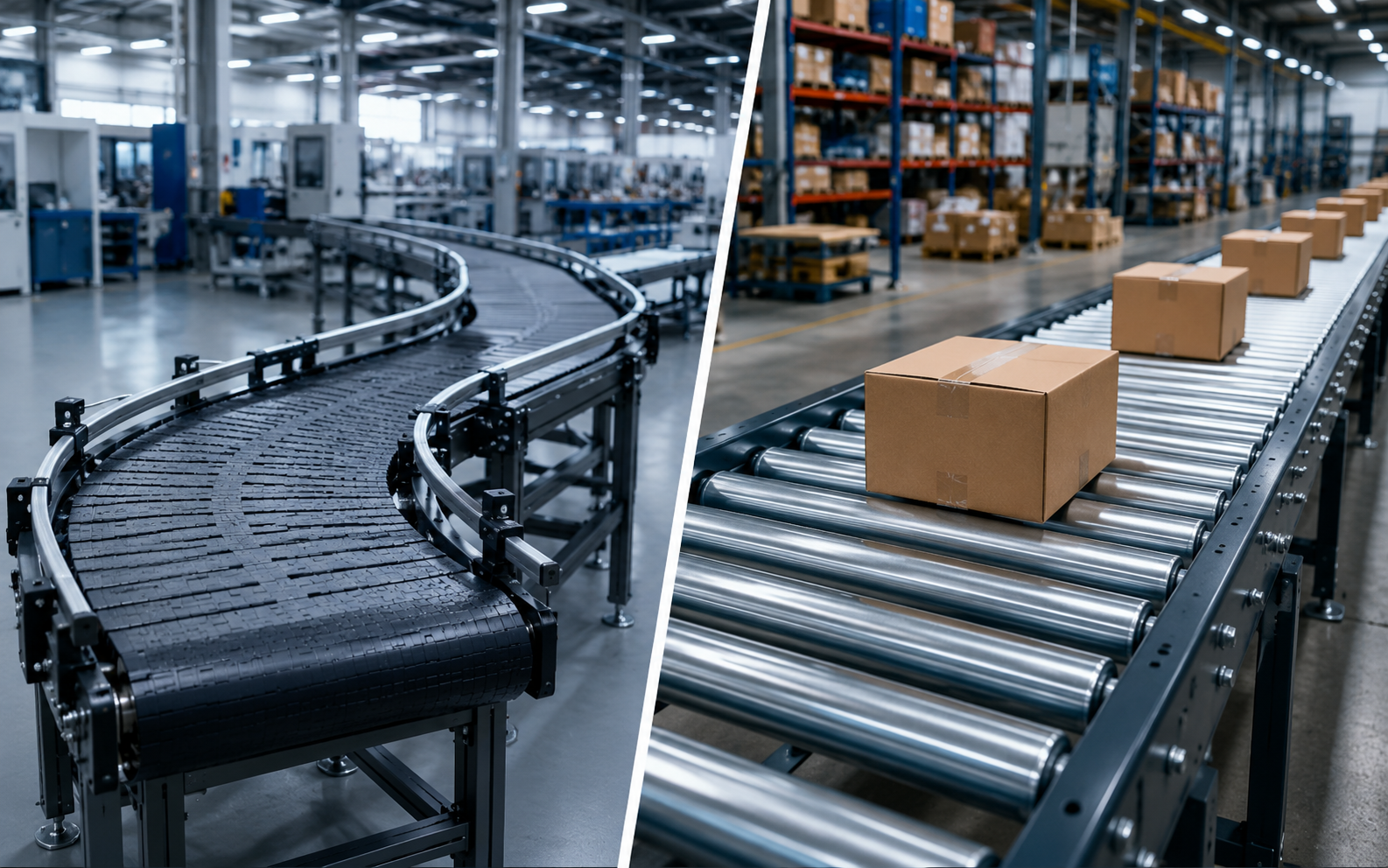
A practical selection guide for factories, warehouses, logistics centres, packaging lines and industrial automation projects.
Choosing between standard conveyors and custom conveyor systems is not simply a choice between “cheap” and “premium.” It is a decision about application fit. A standard conveyor can be the most reliable and economical answer when the product, route, speed and interfaces are predictable. A custom-engineered conveyor becomes valuable when the line must solve a specific process constraint that standard equipment cannot address safely or consistently.
The wrong decision creates cost in two different ways. Over-customising a simple requirement can add avoidable engineering, unique parts and project time. Under-customising a difficult application can lead to unstable transfers, product damage, repeated operator intervention, inaccessible maintenance points, weak machine integration and expensive rework after installation.
There is also a third option that buyers often overlook. Many of the strongest conveyor solutions use standard modules, drives, bearings, belts, rollers, sensors and controls inside a layout engineered around the product and process. This hybrid approach standardises what should be standardised while customising only the geometry, interfaces and performance features that create real operational value.
This guide explains what standard and custom conveyor systems actually mean, how they differ, where each approach works best and how to make a defensible selection before requesting quotations.
| Selection shortcut Choose the least-complex conveyor that fully meets the real operating requirement. Standardise common components wherever possible, but do not force a standard layout into a non-standard product, route, environment or control process. |
What Is a Standard Conveyor System?
A standard conveyor is a pre-engineered or configurable system built from established sizes, modules and component options. It may still be manufactured to order, but its basic architecture is already proven. Typical examples include straight gravity roller sections, powered roller zones, flat belt conveyors, modular belt sections, portable loading conveyors and transfer platforms assembled from a defined product range.
“Standard” does not necessarily mean one fixed off-the-shelf machine. Modern modular platforms can combine straight sections, curves, merges, transfers, lifts and controls. The important distinction is that the manufacturer is selecting and configuring known modules instead of designing every mechanical and electrical interface from the beginning.
A standard or configurable conveyor is strongest when product dimensions, load, route, duty cycle and upstream or downstream conditions already fit the available design envelope. It can reduce engineering risk because the main components, spare parts and maintenance procedures are familiar.
What Is a Custom Conveyor System?
A custom conveyor system is engineered around a defined application rather than asking the process to adapt to a standard machine. Customisation can involve the frame, conveying surface, width, height, route, transfer geometry, supports, guarding, materials, controls, sensors, fixtures, workstations, cleanability, product orientation or interfaces with other equipment.
Custom does not mean that every bolt, motor or bearing should be unique. Good custom engineering normally uses reliable standard components wherever they meet the requirement. The custom value lies in how those components are selected, arranged, controlled, tested and integrated to deliver a specific operating result.
A custom conveyor is therefore justified by a measurable need: an irregular product, a demanding transfer, a restricted footprint, multiple elevations, a special environment, precise process timing, automatic routing, operator work content, machine communication, safety constraints or future capacity that a standard configuration cannot support adequately.
Standard vs Custom Is a Spectrum, Not a Binary Choice
Most real projects sit somewhere between a catalogue section and a completely bespoke system. A straight powered roller line may use standard modules but require custom supports and a machine interlock. An assembly conveyor may use a proven pallet platform but need project-specific fixtures, workstations, traceability and control logic. A telescopic or portable truck-loading conveyor may be based on a standard product family while its length, height range, belt width and controls are configured for the site.
The practical question is not “standard or custom?” in isolation. It is: which parts of the solution can remain standard, and which parts must be engineered to achieve safe and repeatable performance?
Custom Conveyor Systems vs Standard Conveyors: Quick Comparison
| Decision area | Standard / configurable conveyor | Custom-engineered conveyor |
| Best application | Repeatable products, simple routes and known operating conditions | Unusual products, complex routes, special environments or integrated processes |
| Engineering effort | Lower because the platform and component combinations are already established | Higher because product behaviour, interfaces, controls and risks must be analysed |
| Lead-time predictability | Usually easier to estimate when modules and options are defined | Depends on design approval, component availability, fabrication, software and testing |
| Initial investment | Often lower for an equivalent simple duty | Often higher because the scope includes application engineering and project-specific features |
| Layout flexibility | Strong within the available module sizes and combinations | High when the route requires custom heights, curves, transfers, structures or access |
| Automation | Suitable for basic sensors, zone control and standard interfaces | Suitable for machine handshakes, PLC/HMI logic, scanning, traceability, robots and routing |
| Maintenance | Familiar parts and procedures can simplify stocking and service | Maintenance quality depends on component standardisation, documentation and access design |
| Expansion | Good within a compatible modular platform | Can be designed for phased growth, new products and future equipment interfaces |
| Main risk | Selecting a standard platform that does not truly fit the application | Adding complexity that is not linked to a measurable operational requirement |
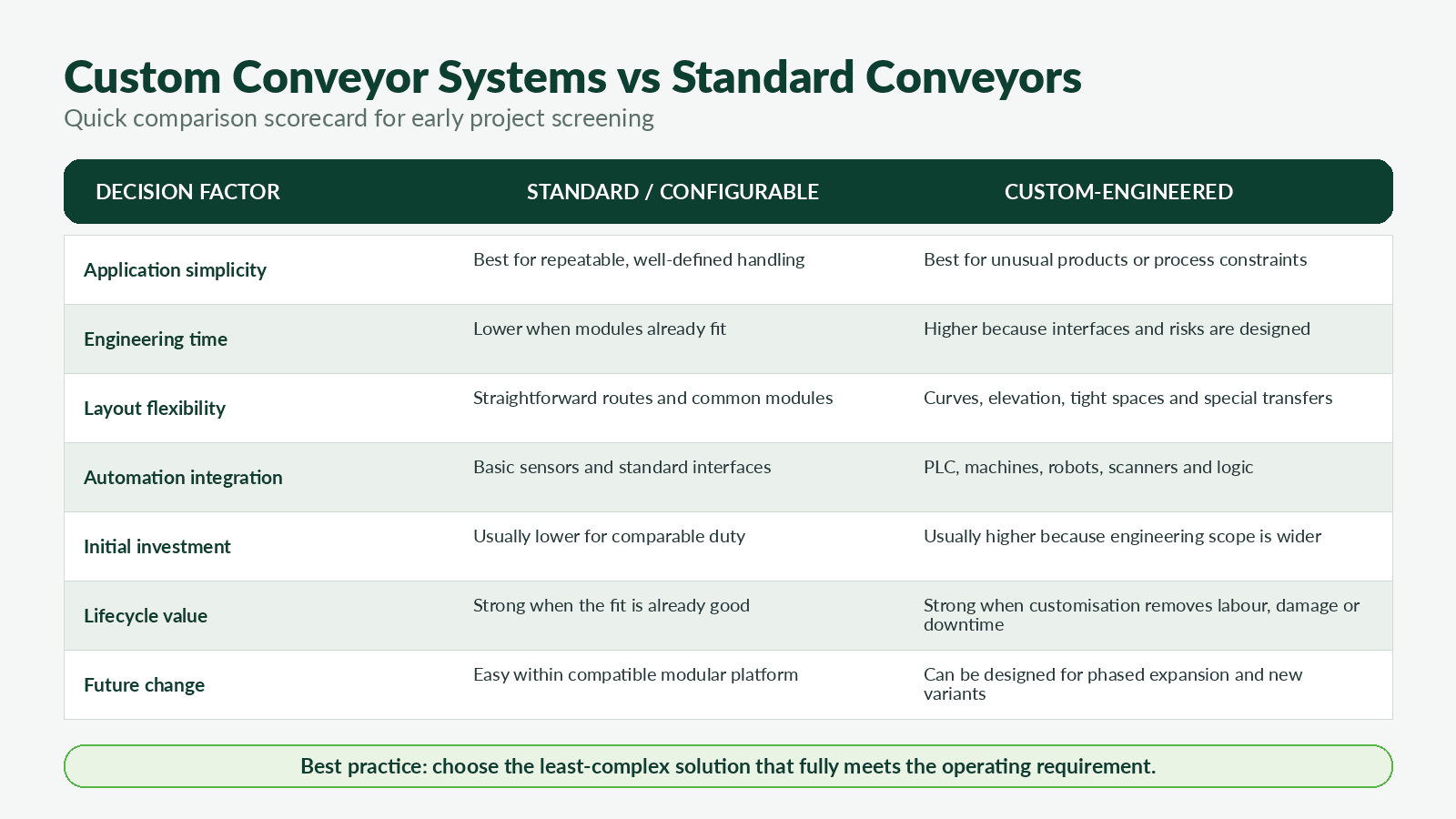
Figure 1. Standard conveyors simplify repeatable applications; custom systems create value when the application requires additional engineering.
10 Factors That Determine the Right Choice
1. Product Characteristics
Start with the item being moved. Stable cartons, totes and pallets often fit standard belt or roller platforms. Small components, flexible pouches, hot products, sharp parts, fragile items, leaking containers or loads with an unstable centre of gravity may require a specialised conveying surface, side guides, fixtures, orientation or transfer design. Test the smallest, largest, lightest and heaviest product – not only the average sample.
2. Route and Available Space
A straight horizontal path is easier to standardise. Tight floor space, columns, doorways, operator crossings, mezzanines, curves, elevation changes and multiple infeed or discharge points increase the need for project-specific layout engineering. The conveyor must also preserve access to machines, fire routes, cleaning areas and maintenance zones.
3. Throughput, Accumulation and Duty Cycle
A conveyor that moves ten cartons per hour is a different machine from a line that runs continuously across multiple shifts. Peak rate, normal rate, accumulation length, start-stop frequency, maximum load per metre and required availability influence drive sizing, zone design, controls, bearing selection and redundancy. Standard equipment works when these values remain within its proven operating range.
4. Product Transfers
Many conveyor problems occur at the gap between sections, not on the main conveying surface. Short products, soft bags, tall cartons, unstable trays and heavy pallets may tip, stall, rotate or collide during transfer. Custom nose bars, powered transfers, pop-up units, chain transfers, guides, timing logic or product fixtures may be necessary where a simple end-to-end connection is not reliable.
5. Operating Environment
Dry indoor handling is easier to standardise than dusty, corrosive, wet, hot, cold, outdoor, washdown or hygiene-sensitive operation. Material grade, coating, belt or roller specification, sealing, drainage, cleanability and electrical enclosure selection must match the environment. Do not specify stainless steel automatically, but do not use a basic painted frame where corrosion or cleaning requirements make it unsuitable.
6. Controls and Machine Integration
A standard conveyor can include a motor starter, VFD, photoelectric sensor or basic zero-pressure accumulation. Custom engineering becomes more important when the line must exchange signals with packaging machines, robots, scanners, weighing systems, printers, inspection equipment, WMS/MES or existing PLCs. The control philosophy should define start permission, blocked conditions, fault handling, safe restart, product tracking and responsibility at every interface.
7. Safety and Access
Both standard and custom conveyors require site-specific safety review. A standard module can become hazardous when installed beside a workstation, above an aisle or next to another machine. A custom system can create new nip, shear, crush, entanglement or access hazards at its interfaces. Risk assessment should cover guarding, emergency stops, pull cords, interlocks, crossings, maintenance isolation, restart logic and access for cleaning and service.
8. Delivery Schedule
Standard platforms can shorten the design cycle when the application is clear and components are available. Custom systems require additional time for requirement review, concept development, drawings, approvals, programming, fabrication and testing. A rushed custom project is especially risky when the buyer has not frozen product data, interfaces or acceptance criteria.
9. Capital Budget and Commercial Scope
Standard equipment often has a more predictable initial price, but quotations still need to be compared like for like. Confirm supports, drives, panel, sensors, guards, cabling, freight, installation, commissioning and documentation. Custom quotes should identify the engineering and integration scope rather than hiding it inside a single total.
10. Lifecycle Value and Future Change
The lowest purchase price is not always the lowest cost per unit handled. Compare labour, damage, rework, downtime, energy, maintenance, spares and changeover. Also consider whether product sizes, production volume, facility layout or automation requirements may change. A modular standard platform may expand easily; a custom system can also be designed for future stages if interfaces and spare capacity are planned from the beginning.
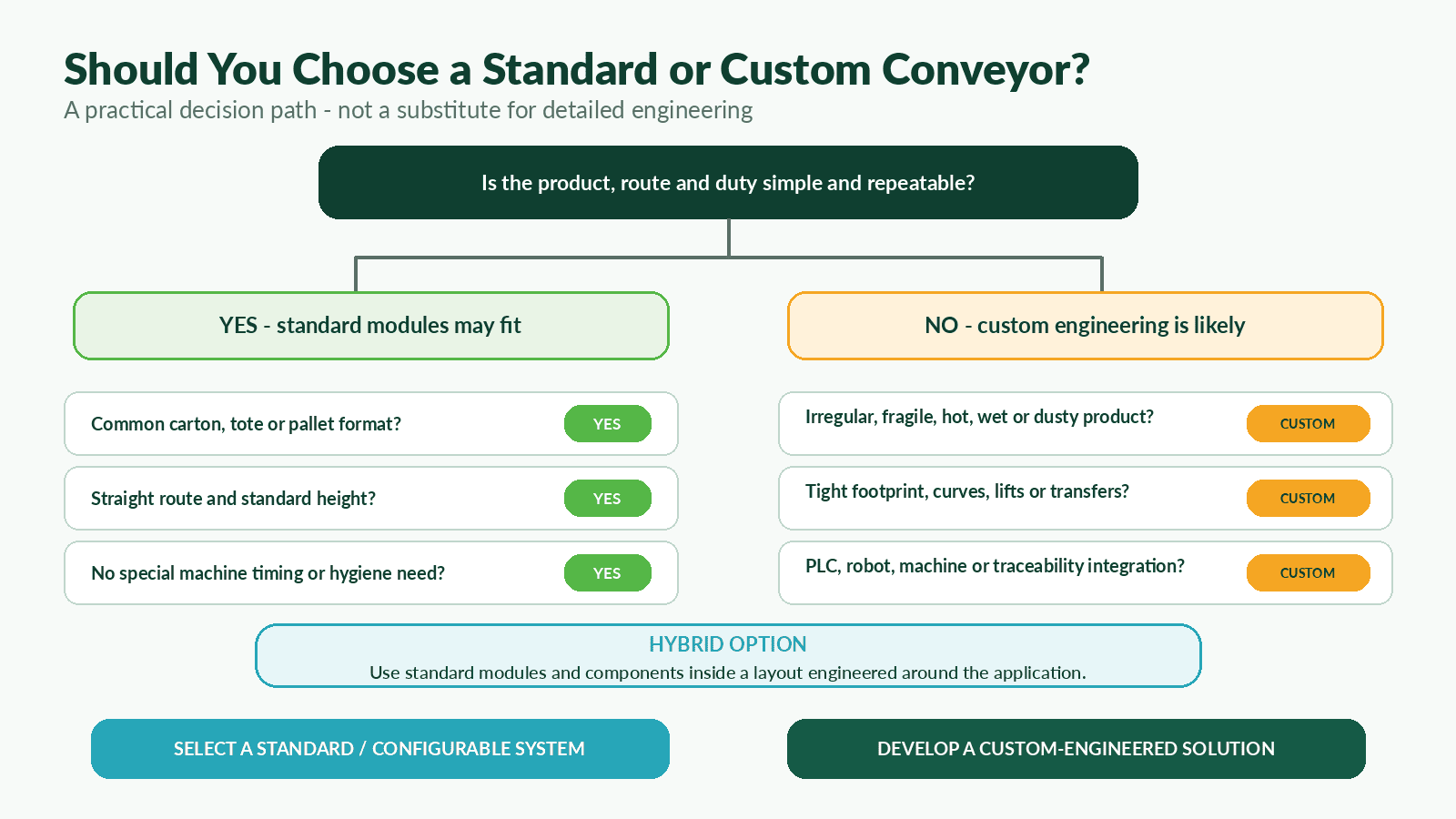
Figure 2. Use standard equipment when the requirement fits a proven platform; use custom engineering when product, route, environment or integration creates additional constraints.
When a Standard Conveyor Is Usually the Better Choice
A standard or configurable conveyor is normally the better option when the process is well understood and the available platform already meets the requirement without uncomfortable compromises. Common examples include a straight gravity roller lane for cartons, a powered roller transfer between warehouse zones, a simple flat belt conveyor between two packaging stations or a portable conveyor used for a repeatable loading task.
The product range is stable and fits the published width, load and transfer limits.
The route is straight or can be built from standard curves, merges and supports.
Throughput and duty cycle sit comfortably inside the platform rating.
Controls are limited to basic starting, speed control, sensing or zone accumulation.
The environment does not require unusual materials, sealing or cleanability.
Installation interfaces are simple and do not require major structural or machine modifications.
A compatible modular platform supports future length or route changes.
Standard does not mean under-specified. The manufacturer should still validate load, speed, stability, support spacing, motor capacity, guarding and site conditions before approval.
When Custom Conveyor Engineering Is Worth the Investment
Custom engineering is justified when it removes a specific operational constraint or creates a result that cannot be delivered reliably by a standard configuration. The business case should be linked to throughput, labour, product quality, safety, space, traceability, availability or future capacity – not to customisation for its own sake.
Products are irregular, flexible, fragile, hot, sharp, sticky, unstable or highly variable.
The route includes tight curves, multiple levels, special transfers, machine access or restricted floor space.
The conveyor must hold, rotate, index, stop, orient, inspect, weigh or reject products.
Workstations, tools, lighting, fixtures or operator tasks must be integrated around takt time.
The line must communicate with PLCs, robots, scanners, packaging machines, WMS/MES or traceability systems.
The environment requires washdown, corrosion resistance, dust control, temperature resistance or hygienic design.
The process has high downtime cost and needs testing against defined performance and acceptance criteria.
Future products or expansion stages require planned interfaces, reserved capacity or modular extension points.
Why the Hybrid Modular Approach Often Works Best
The most practical custom conveyor systems are frequently built from a disciplined combination of standard and engineered elements. Standard motors, gearboxes, bearings, rollers, belts, sensors, safety components and control hardware can improve spare-parts availability and reduce maintenance complexity. Custom frames, supports, transfers, fixtures, guarding, layouts and software can then address the parts of the process that are genuinely unique.
This approach also makes quotation review easier. The supplier should identify which modules are standard, which components are configurable and which features require custom design. Buyers can then challenge unnecessary uniqueness while protecting the application-critical scope.
| Design principle Standardise components; customise application fit, product transfer, interfaces, safety and performance only where the requirement demands it. |
Application Examples: Standard, Custom or Hybrid?
| Application | Likely approach | Why |
| Straight carton movement between two warehouse stations | Standard / configurable powered roller conveyor | Stable flat-bottom loads, simple route and basic sensing fit a proven modular platform. |
| Mixed pouches leaving a packaging machine | Custom or hybrid belt conveyor | Flexible packs may need full support, short transfers, side guides, speed matching and jam logic. |
| Pallet routing to a robot cell with 90-degree transfer | Hybrid custom system | Standard pallet modules can be combined with custom interfaces, transfer logic, guarding and robot handshakes. |
| Manual assembly line with tools, lighting and inspection stations | Custom assembly conveyor | Workstation spacing, takt time, fixtures, utilities, traceability and ergonomics are process-specific. |
| Repeatable truck loading at one dock | Configurable portable or telescopic conveyor | A proven platform may be sized for vehicle dimensions, extension, height range and loading rate. |
| Washdown food product handling | Custom hygienic conveyor | Material, belt, drainage, cleaning access, sealing and contamination controls require application-specific design. |
| Bulk powder transfer between a hopper and process machine | Custom screw conveyor | Material behaviour, capacity, screw geometry, sealing, inlet, outlet and cleanability must be engineered. |
Cost, Lead Time and Lifecycle Value
Standard conveyors usually require less application engineering and fewer unique parts, so their initial price and delivery plan are easier to predict when the platform fits. Custom conveyor systems add requirement analysis, drawings, calculations, software, special fabrication, testing and site integration. That work should be visible in the technical and commercial scope.
However, purchase price is only the first cost. A cheaper conveyor that needs operators to reposition products, causes frequent jams, damages packaging, blocks maintenance access or cannot match machine speed may create a higher operating cost. A custom feature is economically sensible when the value of the problem it removes exceeds the extra project and lifecycle cost.
For an early business case, estimate annual net value as labour saved plus product damage avoided plus additional capacity value plus downtime avoided, minus any additional energy and maintenance cost. Compare that benefit with the total installed project cost, not only the equipment price. Convello’s conveyor cost guide provides a separate framework for comparing equipment, controls, safety, installation, freight, GST and spares.
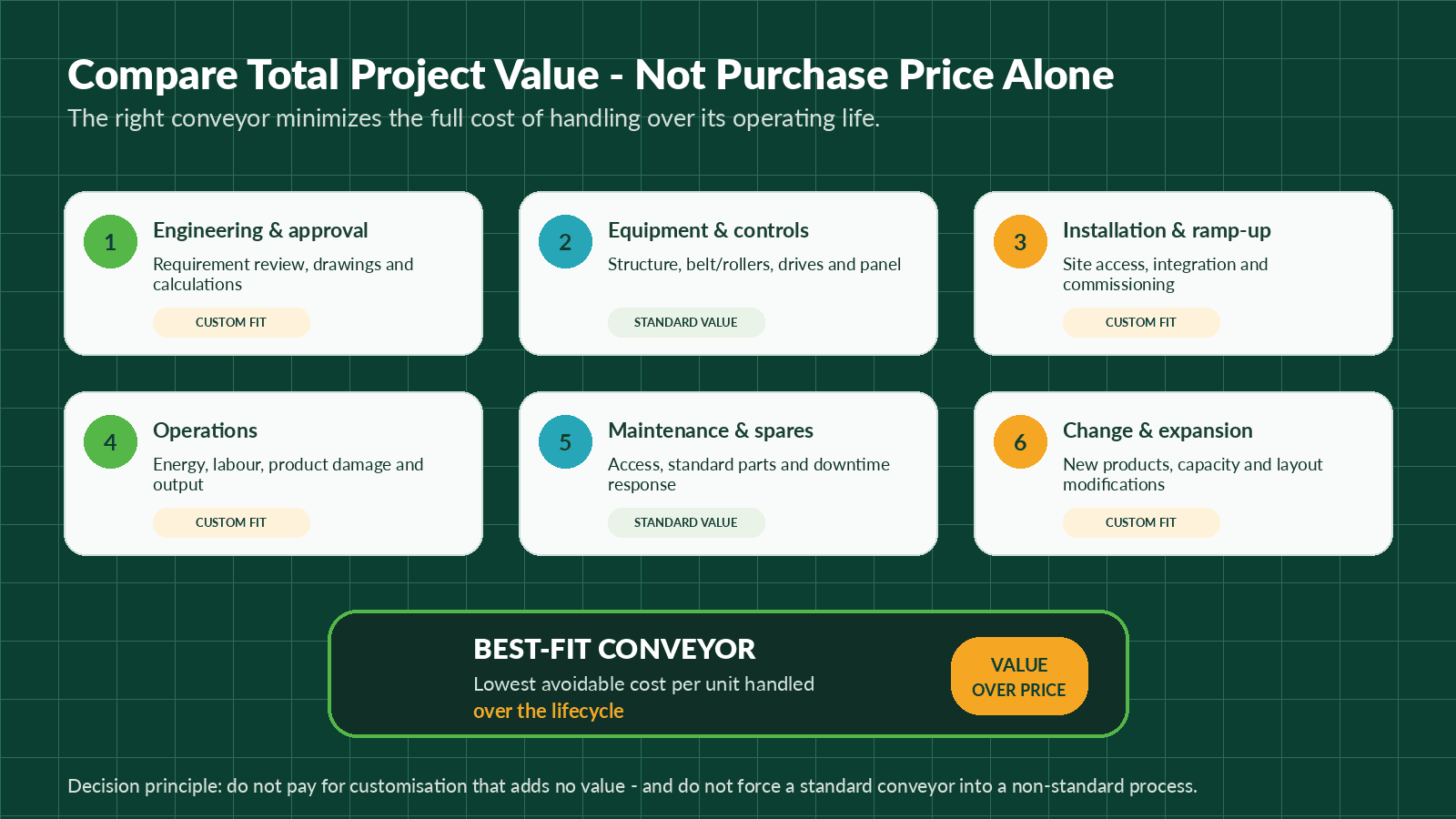
Figure 3. Compare the complete project lifecycle: engineering, equipment, installation, operations, maintenance and future change.
A 7-Step Process for Choosing the Right Conveyor Approach
1. Define the operating result
Write what must move, from where to where, at what rate and under which conditions. Include product range, normal and peak throughput, accumulation, operating hours, current bottleneck and target improvement.
2. Map the route and interfaces
Mark start and end points, conveyor heights, curves, inclines, crossings, columns, doors, workstations and machine connections. Identify who supplies each mechanical, electrical and software interface.
3. Screen for a standard platform
Ask whether a proven belt, roller, pallet, slat, telescopic or screw conveyor platform can satisfy the requirement inside its rated limits. Do not reject standard equipment simply because the project needs configurable length or options.
4. Identify the true custom requirements
List only the constraints that a standard configuration cannot solve: unusual product support, transfer geometry, hygiene, precision positioning, fixtures, routing, controls, safety, structural access or future stages.
5. Compare alternatives on lifecycle value
Evaluate initial cost, delivery, throughput, labour, damage, downtime, maintainability, spares and expansion. Use the same assumptions for every alternative.
6. Freeze the technical scope and acceptance criteria
Approve the layout, product data, capacity, speed, controls, safety concept, materials, interfaces, documentation, installation responsibilities and FAT/SAT tests before treating quotations as final.
7. Select the manufacturer on evidence
Choose a supplier that can explain the design basis, component specification, testing plan, exclusions, schedule and after-sales support. The lowest quotation is not comparable if it excludes essential engineering, safety or integration work.
Common Mistakes to Avoid
Buying by conveyor length alone
Length does not define the product load, width, route, motor, controls, safety or integration scope.
Calling every made-to-order conveyor “custom”
A configured standard platform is often sufficient and easier to maintain. Ask exactly what is standard, configurable and bespoke.
Assuming a standard conveyor is automatically safer
Safety depends on the complete installation, access and interfaces, not only the base module.
Ignoring transfers until detailed design
Product handoff is a common source of jams, tipping and damage. Review it with real samples or representative test products.
Adding automation without an operating philosophy
Sensors and PLC hardware do not define how the line should respond to blocked products, faults, emergency stops or upstream/downstream conditions.
Customising components that should remain standard
Unique motors, bearings, sensors or fasteners can create avoidable spare-parts and service problems.
Comparing prices before aligning scope
One supplier may include the panel, guarding, installation and commissioning while another quotes mechanical equipment only.
Skipping FAT, SAT and documentation
Custom performance should be verified against agreed criteria, and the final system should include drawings, manuals, spare-parts information and training as applicable.
What Information Is Needed for an Accurate Conveyor Proposal?
A clear requirement allows the manufacturer to determine whether a standard, custom or hybrid solution is appropriate. Share the following information before expecting a firm technical and commercial proposal:
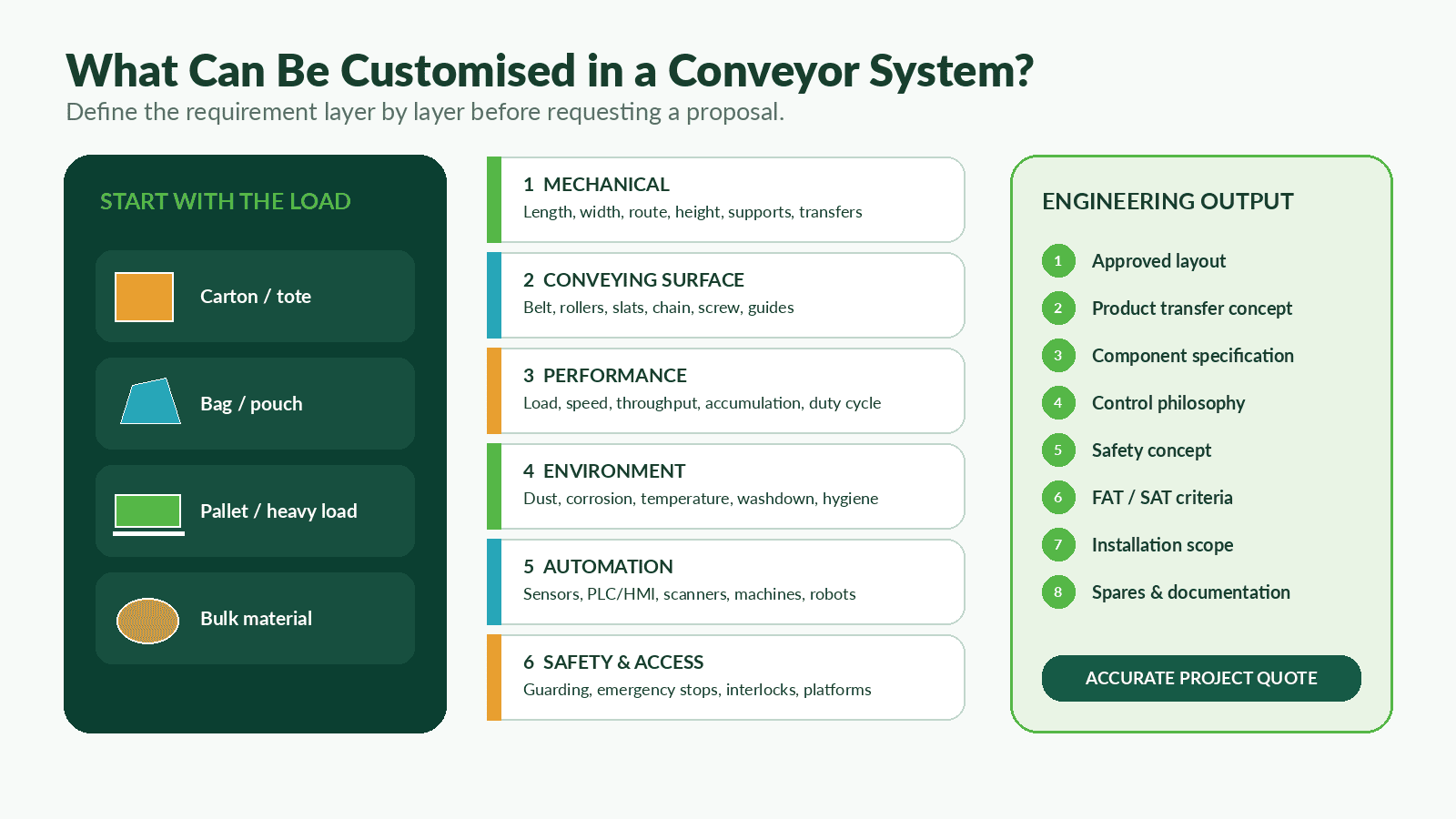
Figure 4. A complete requirement brief connects product data, mechanical design, performance, environment, automation and safety to the final engineering output.
Product name, packaging type, photographs and representative samples
Minimum and maximum product length, width, height and weight
Product underside, centre of gravity, fragility, temperature and surface condition
Normal and peak throughput, line speed, accumulation and operating hours
Route length, usable width, conveyor height, curves, inclines and elevation changes
Floor plan, machine layout, access restrictions and preferred maintenance side
Operating environment, cleaning method, dust, moisture, corrosion and temperature
Available electrical and pneumatic utilities
Required sensors, PLC/HMI, scanners, weighing, inspection, traceability or robot interfaces
Guarding, emergency stop, crossover, platform and client safety requirements
Installation location, shutdown window, civil/electrical responsibilities and unloading access
Expected drawings, manuals, tests, training, warranty and spare-parts package
Future product, capacity or layout changes that should be allowed for
| For a faster quotation Send a dimensioned layout or hand sketch, product photos or samples, a short process video, throughput target, operating environment and a written list of machine or control interfaces. |
Why Consider Convello for a Custom or Configurable Conveyor Project?
Convello designs and manufactures conveyor systems for manufacturing, warehousing, logistics, e-commerce, food processing and FMCG applications. Its product range includes belt, roller, telescopic, assembly line, pallet, screw, slat-chain, curve, inclined, spiral and waste-handling conveyors.
That range allows a project to be evaluated from the application outward rather than beginning with one fixed conveyor type. A requirement can be screened for a standard or configurable solution first, with custom design, controls, supports, safety and integration added where the operating process requires them.
To discuss a project, share the product dimensions and weight, throughput, route, layout, environment, automation needs, site location and any available photos, drawings or process video through Convello’s conveyor quotation page.
Frequently Asked Questions
What is the main difference between standard and custom conveyor systems?
A standard conveyor uses a proven platform, module range and component options. A custom conveyor system is engineered around application-specific product, route, environment, control, safety or integration requirements. Many projects combine both approaches.
Are custom conveyor systems always more expensive?
They usually involve more engineering and project-specific work, so the initial cost can be higher. The right comparison is lifecycle value. Customisation can be economical when it reduces labour, product damage, downtime, floor-space use or integration risk.
Is a modular conveyor the same as a standard conveyor?
A modular conveyor is built from compatible standardized sections and components. It can be used as a standard configuration or combined into a custom-engineered layout. Modularity describes the platform; customisation describes how the final solution is adapted to the application.
When should I avoid a custom conveyor?
Avoid unnecessary customisation when a proven standard platform already meets the product, load, route, speed, environment and control requirement. Unique components and geometry should have a clear operational reason.
Can a standard conveyor integrate with a PLC or sensors?
Yes. Standard conveyors can include VFDs, sensors, motorized zones and common control interfaces. Custom engineering is more likely when the line needs complex machine handshakes, routing, tracking, inspection, robots or site-specific fault logic.
Which conveyor type is easiest to standardise?
Straight gravity roller, powered roller and flat belt conveyors for stable, repeatable products are often easy to configure from standard platforms. The final choice still depends on the product base, weight, transfer, speed and environment.
What parts of a custom conveyor should remain standard?
Where possible, use established motors, gearboxes, bearings, belts, rollers, sensors, safety devices, PLC hardware and fasteners. Customise the layout, support, transfer, fixture, guarding and logic only where application fit requires it.
How do I know whether a transfer needs custom design?
Custom transfer engineering may be needed when products are short, flexible, unstable, fragile, heavy or must maintain orientation. Test the worst-case product at the required speed and gap, not only a convenient sample.
Does custom design increase maintenance difficulty?
It can if unique parts, poor access or incomplete documentation are introduced. It can also improve maintenance by designing better access, isolation, cleaning and replaceable wear components. Ask for component lists, drawings and recommended spares.
How should I compare standard and custom conveyor quotations?
Issue the same requirement to each supplier and align the scope for structure, conveying surface, drives, panel, controls, safety, supports, freight, installation, commissioning, testing, documentation, warranty and spares.
What tests should be completed before handover?
Testing should reflect the agreed application. It may include representative products, minimum and maximum loads, throughput, accumulation, transfers, controls, alarms, emergency stops, restart behaviour, machine interfaces and sustained operation.
What should I send Convello for a custom conveyor quote?
Provide product photos and dimensions, unit weight, required throughput, route and layout, height changes, environment, power, automation and safety needs, site location and any drawings or process video.
Final Takeaway
Choose a standard conveyor when a proven platform already fits the product, route, duty and interfaces. Choose a custom conveyor system when the application requires special product handling, layout, environment, controls, safety or integration. In many projects, the strongest solution is hybrid: standard, maintainable components inside an application-specific engineered layout.
The decision should be based on the least-complex solution that achieves reliable performance over the full lifecycle. Define the operating result, compare alternatives on the same scope, approve acceptance criteria and select a manufacturer that can explain how the proposed system will be verified.
| Planning a conveyor system for your factory or warehouse? Share your requirement with Convello. |