+91 99980 88430 | +91 95589 17778
  info@convello.in | sales@convello.in
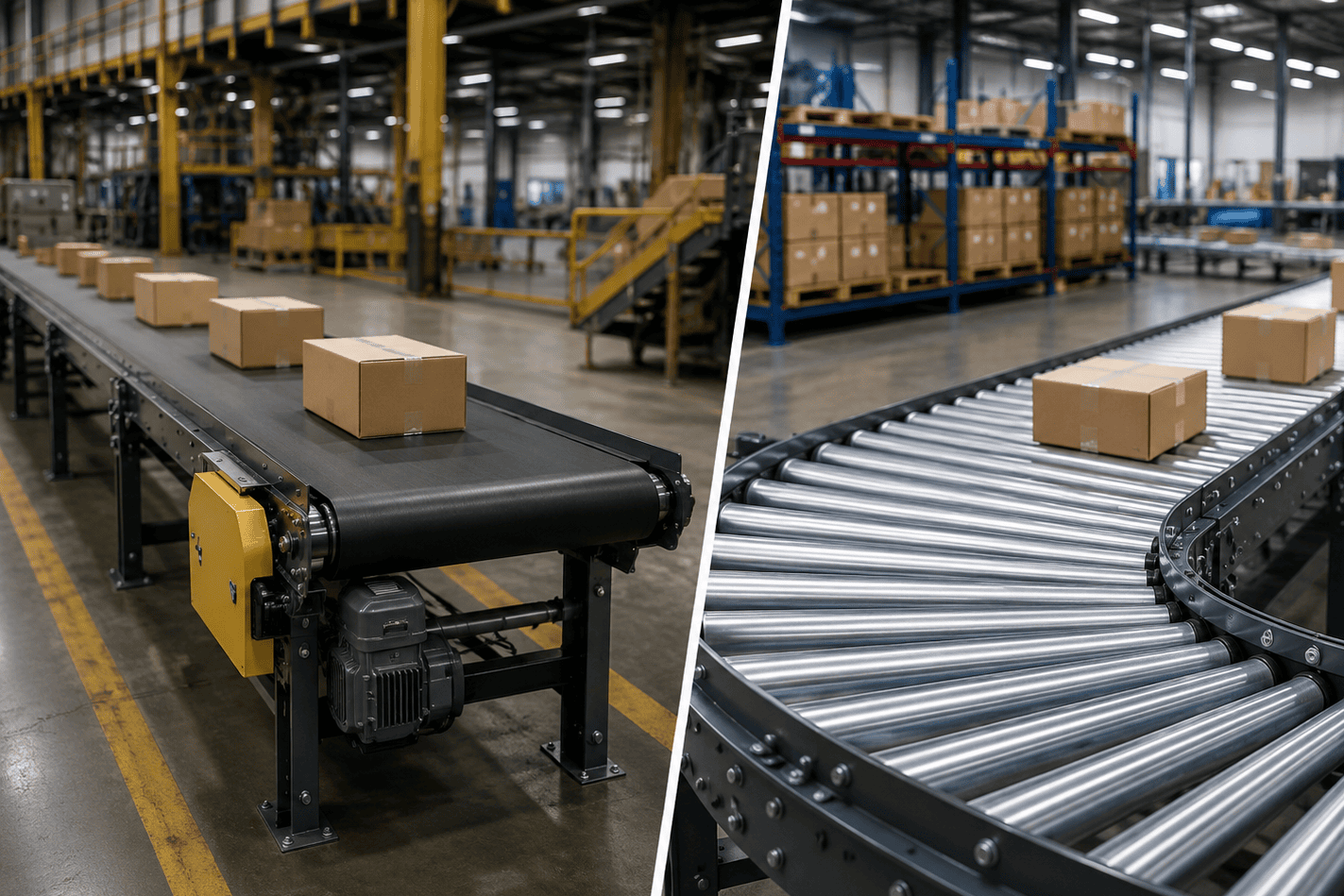
A practical product-first comparison for factories, warehouses, packaging lines, logistics centres and e-commerce operations.
Choosing between a belt conveyor and a roller conveyor is not a matter of selecting the machine that looks more advanced. The correct choice depends on the product touching the conveyor, how that product must move, where it must stop, the route it must follow and the conditions in which the system will operate.
At a glance, the central difference is simple: a belt conveyor provides a continuous carrying surface, while a roller conveyor supports the load at individual contact points. That difference influences product compatibility, accumulation, incline handling, cleaning, maintenance, noise and total project cost. This belt conveyor vs roller conveyor guide explains how to compare both systems before requesting a quotation.
Selection shortcut
Start with the product underside. If it is soft, flexible, uneven, unstable or too short to bridge practical roller spacing, begin with a belt conveyor. If it is flat, rigid and stable, compare gravity and powered roller options. Then validate the route, throughput, accumulation, environment and safety requirements.
Belt Conveyor vs Roller Conveyor: Quick Comparison
| Decision factor | Belt conveyor | Roller conveyor |
| Carrying surface | Continuous belt supports the full underside | Separate rollers create contact lines and gaps |
| Best starting point | Bags, pouches, small or irregular products | Rigid cartons, totes, drums and pallets with stable bases |
| Gravity movement | Not normally available | Available with properly designed gravity sections |
| Accumulation | Possible, but friction and controls need careful design | Strong option with powered zones and zero-pressure logic |
| Incline or decline | Strong with suitable belt surface, cleats or sidewalls | Generally level or gentle decline unless specially engineered |
| Typical maintenance | Tracking, tension, belt surface, splice and cleaning | Rollers, bearings, bands or chains, sensors and controls |
| Cost pattern | Basic powered transport can be straightforward | Gravity can be economical; zoned powered systems add controls |
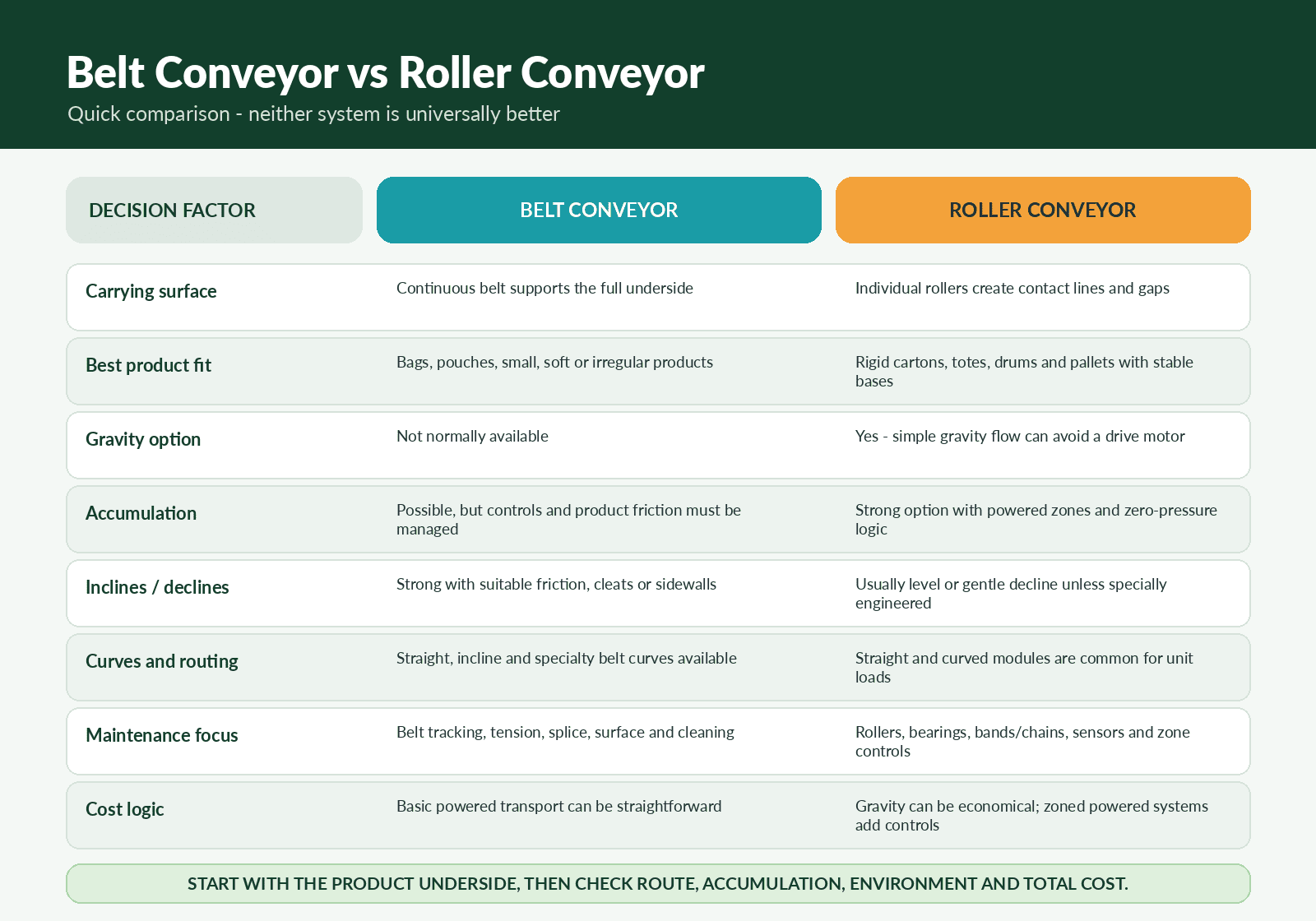
Figure 1. A fast comparison of belt and roller conveyor strengths.
What Is a Belt Conveyor?
A belt conveyor system uses an endless belt that travels around drive and tail pulleys. Depending on the design, the belt may slide over a bed or run over supporting rollers. The system can include a geared motor, tensioning and tracking mechanisms, side guides, sensors, variable-speed control and guarding.
Because the belt forms a continuous surface, it supports almost the entire underside of the product. This makes belt conveyors a strong starting point for soft packs, polybags, pouches, sacks, small cartons, irregular parts and products that may tip or fall between rollers. Belt materials can be selected around grip, abrasion resistance, temperature, food-contact requirements, oil exposure, static control and cleaning method.
Common configurations include flat belt, cleated belt, troughed belt, modular plastic belt, incline or decline conveyor and telescopic belt conveyor.
Typical applications include packaging, assembly, inspection, sorting, product transfer, food handling, manufacturing and vehicle loading.
The final belt type and construction should be selected from the actual product, environment and duty cycle rather than from the conveyor length alone.
What Is a Roller Conveyor?
A roller conveyor system uses a series of parallel rollers mounted in a frame. The product moves by gravity, manual push or powered rotation. Roller diameter, material, shaft, bearing, spacing and drive method are selected around the product dimensions, weight, speed and operating environment.
The spacing between rollers is called roller pitch. It is a critical design input because the smallest product must remain stable and supported as it travels. A rigid carton with a flat base may move smoothly, while a polybag or soft package can sag into the gaps, increase drag or jam.
Gravity roller conveyor: products move by a controlled slope or manual push, so the conveyor section does not require a drive motor.
Powered or live roller conveyor: a motor drives multiple rollers using belts, bands, chains or another transmission method.
Motor-driven roller conveyor: individual zones use motorised rollers, sensors and controls for transport and accumulation.
Special formats include curve roller, flexible scissor roller, heavy-duty roller and pallet-handling conveyor sections.
12 Practical Differences Between Belt and Roller Conveyors
1. Carrying Surface and Product Support
A belt provides continuous support across the product base. Rollers support the load at separate contact points. This is why a belt is usually more forgiving when the product is soft, flexible, short, uneven or unstable. Roller conveying becomes attractive when the product has a predictable flat base and can bridge the selected roller spacing without rocking or catching.
2. Product Shape, Size and Base Condition
Pouches, sacks, small components and irregular packs usually benefit from a belt because there are no open gaps in the carrying surface. Cartons, totes and trays often move efficiently on rollers. However, “carton” alone is not enough information: the smallest length in the travel direction, base strength, centre of gravity, seams, straps and surface damage must also be considered.
3. Load Capacity and Weight Distribution
Both systems can be engineered for light or demanding duties. Heavy unit loads often suit heavy-duty rollers or a dedicated pallet conveyor because the load can be distributed across multiple rollers and supported by a robust frame. A belt can also move heavy products when the belt, bed, pulleys, drive and structure are designed accordingly. Weight should therefore be evaluated together with contact area, impact, start-stop frequency and load distribution.
4. Accumulation and Buffering
Powered roller conveyors are widely used when cartons or totes must queue before a scanner, sorter, packing station or palletiser. Zoned systems can stop one section while other zones continue moving, and zero-pressure accumulation can prevent products from pushing against one another. Belt accumulation is also possible, but a simple continuously running belt may create sliding friction and back pressure if products are stopped on the surface. The accumulation method must be engineered around product sensitivity and required control.
5. Inclines, Declines and Height Changes
Belt conveyors are normally the stronger starting point for inclines because the belt surface can provide friction, and cleats or sidewalls can help control the product. Roller conveyors are commonly used on level routes or controlled gravity declines. Inclined powered roller designs exist, but the base, traction, spacing and rollback risk require careful checking. For inter-floor movement, the complete elevation, transfer and safety arrangement should be evaluated.
6. Curves, Transfers and Facility Layout
Roller curves are common in carton and tote routes because tapered or specially arranged rollers can guide stable unit loads around a corner. Belt curves are also available, although they use specialised construction. Belt conveyors offer useful straight, incline, decline and Z-frame configurations. In many plants, the most efficient layout uses roller curves for rigid cartons and belt sections where the product needs continuous support or a height change.
7. Speed, Throughput and Product Positioning
Both conveyor types can support automated production and warehouse flows. A belt gives steady continuous motion and is often useful for inspection, assembly, labelling, scanning and controlled transfers. Powered roller systems are effective for zoning, gapping, accumulation and routing cartons or totes. The achievable speed and accuracy depend on the complete drive, control, sensor and product-handling design, not simply on whether the surface is a belt or rollers.
8. Energy Use
A gravity roller section uses no drive motor, although the slope and product speed must be controlled. Motor-driven roller systems can energise only the zones needed at a given moment. A conventional belt section often uses one motor to run the full belt whenever the section is active. These patterns can influence energy use, but the final comparison depends on load, friction, start-stop logic, motor efficiency, controls and operating hours. Avoid accepting a universal “most efficient” claim without application data.
9. Product Protection and Noise
A belt can provide smooth, low-impact support for delicate packs and may operate quietly with suitable materials and construction. Hard cartons moving over steel rollers can create more contact noise, although low-noise rollers, coatings and correct alignment can reduce it. For accumulation, zero-pressure roller control can protect fragile cartons by preventing product-to-product contact. Product trials are valuable when scuffing, vibration, tipping or noise is a concern.
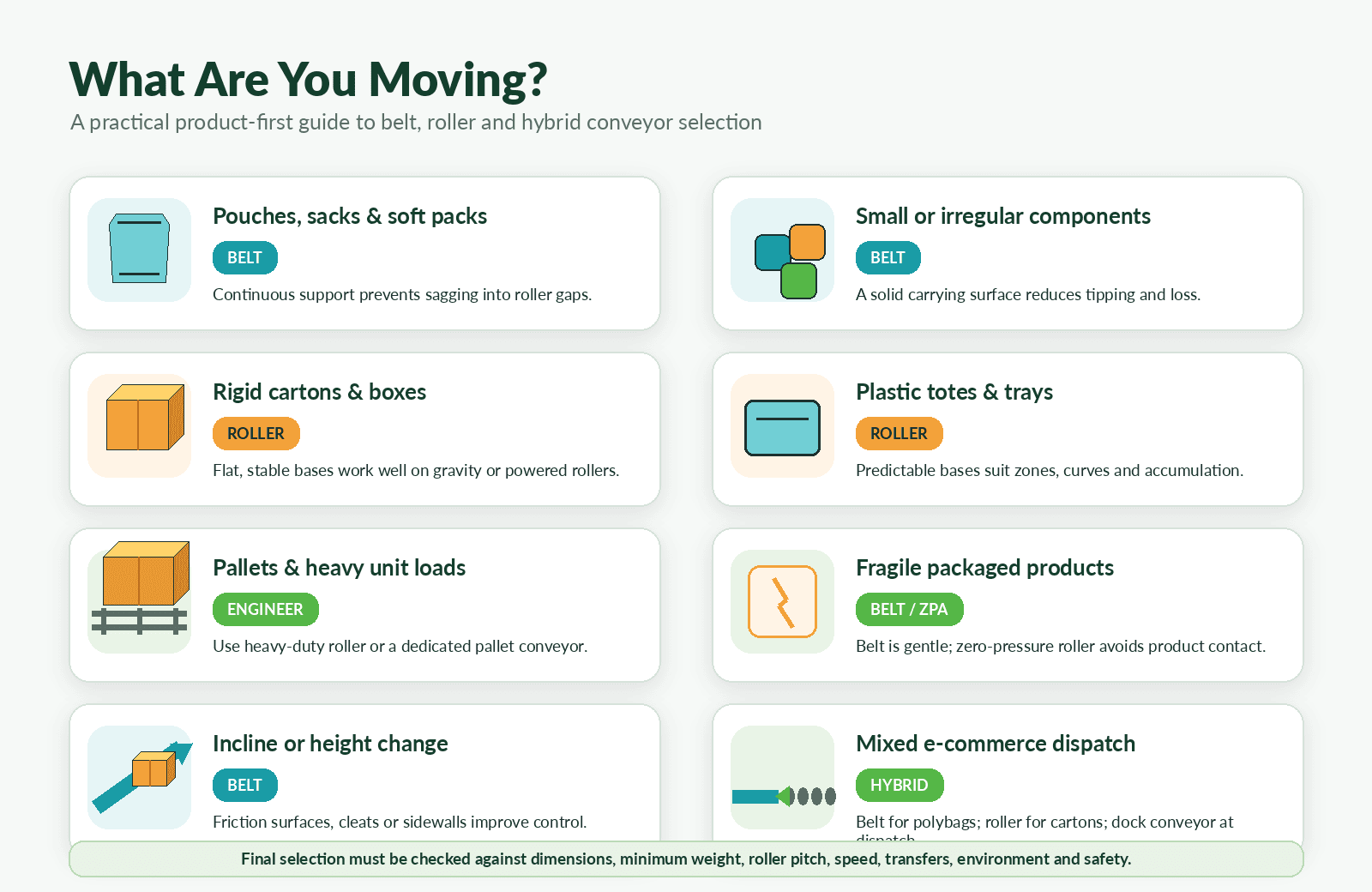
Figure 2. Product-first starting points for belt, roller and hybrid conveyor systems.
10. Cleaning, Hygiene and Operating Environment
A belt can be selected in PVC, PU, rubber or modular plastic, and hygienic stainless-steel constructions are available for suitable applications. A continuous surface may be easier to wipe or wash in some processes, but belt edges, underside access and bed design still matter. Roller gaps allow loose debris to fall through, yet the system contains multiple rollers, bearings and drive components that also need cleaning access. Moisture, washdown, dust, oil, chemicals, temperature and corrosion should be specified before the conveyor is designed.
11. Maintenance and Spare Parts
Belt maintenance typically focuses on tracking, tension, belt condition, splice quality, pulley alignment, cleaning and timely replacement. Roller maintenance focuses on individual rollers, bearings, shafts, drive bands, chains, sprockets, sensors and zone controls. A roller conveyor may allow one damaged roller to be replaced without changing the full conveying surface, while a belt replacement can affect the entire section. The practical winner depends on spare availability, maintenance access, workforce skills and planned downtime.
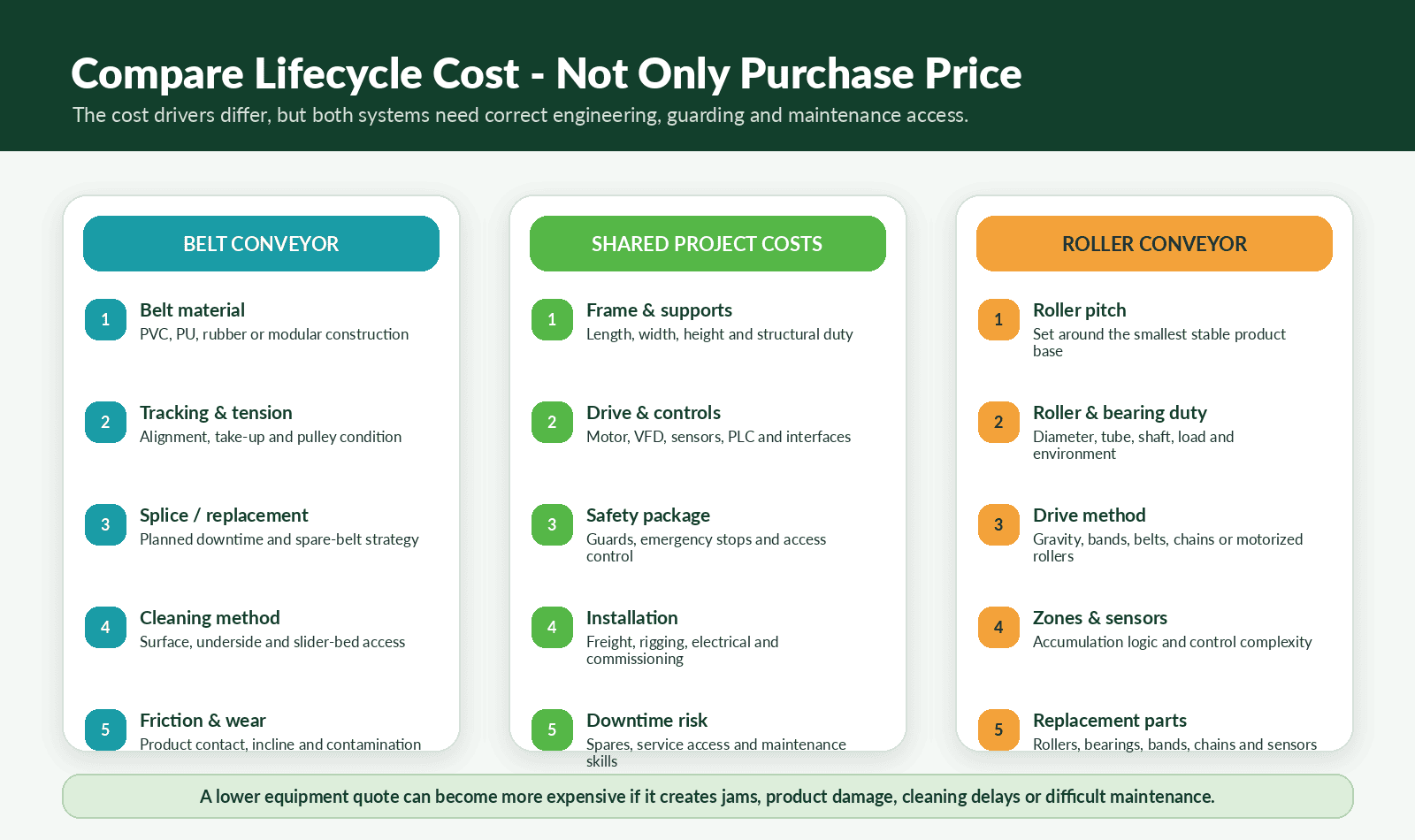
Figure 3. Lifecycle cost and maintenance factors that should be included in a comparison.
12. Purchase Cost and Total Cost of Ownership
A basic gravity roller line is often one of the most economical ways to move suitable products over a straight or gently sloped route. A basic powered belt can also be cost-effective for continuous transport. Powered roller zones, sensors, curves, transfers and controls can increase the roller system cost, while special belt materials, cleats, hygienic construction or complex tracking requirements can increase belt cost. Compare equipment, supports, guards, controls, installation, energy, cleaning, spares, downtime and future expansion instead of comparing only a price per metre.
Safety note
Neither conveyor type is safe by default. Guarding, nip-point protection, emergency stops, controlled starts, stable supports, safe crossings, maintenance isolation and operator training must be designed for the site, local regulations and the project risk assessment.
Which Conveyor Is Better for Specific Applications?
| Application | Best starting point | Why |
| Polybags, pouches and sacks | Belt conveyor | Continuous support reduces sagging, dragging and catching between rollers. |
| Small or irregular components | Belt conveyor | A solid surface helps prevent tipping or falling through gaps. |
| Rigid cartons and boxes | Roller conveyor | Stable flat bases suit gravity, powered transport, curves and accumulation. |
| Plastic totes and trays | Roller conveyor | Consistent bases support predictable zoning and routing. |
| Carton accumulation | Powered zoned roller | Sensors and zone controls can provide zero-pressure buffering. |
| Pallets and heavy unit loads | Heavy-duty roller or pallet conveyor | The design can distribute load across robust rollers and frames. |
| Inclines and declines | Belt conveyor | Friction surfaces, cleats and sidewalls can improve product control. |
| Unpacked food or soft products | Hygienic belt, subject to application | Belt material and sanitary construction can provide continuous product support. |
| Sealed food or FMCG cartons | Belt or roller | Choose from the carton base, accumulation requirement and cleaning environment. |
| Mixed e-commerce dispatch | Hybrid line | Use belt for polybags and small parcels, roller for cartons and dock equipment at dispatch. |
Which Conveyor Is Better for Cartons?
A roller conveyor is usually the first option for rigid cartons with flat, undamaged bases. Gravity rollers can support simple movement, while powered zones can control spacing and accumulation. A belt may still be better when cartons are extremely small, soft, unstable, lightly filled, strapped, damaged or required to stay precisely positioned through a process. The actual carton range should be tested rather than selecting from the largest carton only.
Which Conveyor Is Better for Bags and Pouches?
A belt conveyor is normally preferred for bags, pouches and flexible packs because the product receives continuous support. On rollers, a flexible package may deform into the gaps, create drag or become unstable. Side guides, belt grip, cleats and transfer details should be selected from the pack material, fill level and required incline.
Which Conveyor Is Better for Warehouse Automation?
Roller conveyors are highly effective for standard cartons and totes that require accumulation, merges, curves, scanning and routing. Belt conveyors are valuable for polybags, small parcels, irregular packages, incline sections and controlled transfers. Because modern warehouses handle mixed packaging, a hybrid design is often more practical than forcing every product onto one conveyor type.
When a Hybrid Conveyor System Is the Better Choice
Many production and distribution lines should not be designed as an all-belt or all-roller system. The product often changes form as it moves through the process. A flexible pouch may become a sealed carton, and several cartons may later become a pallet. Each stage has different handling requirements.
Example – food or FMCG packaging: individual packs can travel on a hygienic belt through inspection, weighing or sealing. Closed cartons can transfer to powered rollers for case handling and accumulation. Palletised loads can then move on a heavy-duty pallet conveyor.
Example – e-commerce dispatch: polybags and small irregular parcels can move on belt sections; standard cartons can use roller zones and curves; a telescopic belt conveyor or flexible roller conveyor can support loading and unloading at the dock.
Hybrid design advantage
Using the right conveyor for each stage can reduce jams, improve accumulation, protect products and simplify future expansion. It also prevents over-engineering a complete line around the most difficult product.
How to Select the Right System Step by Step
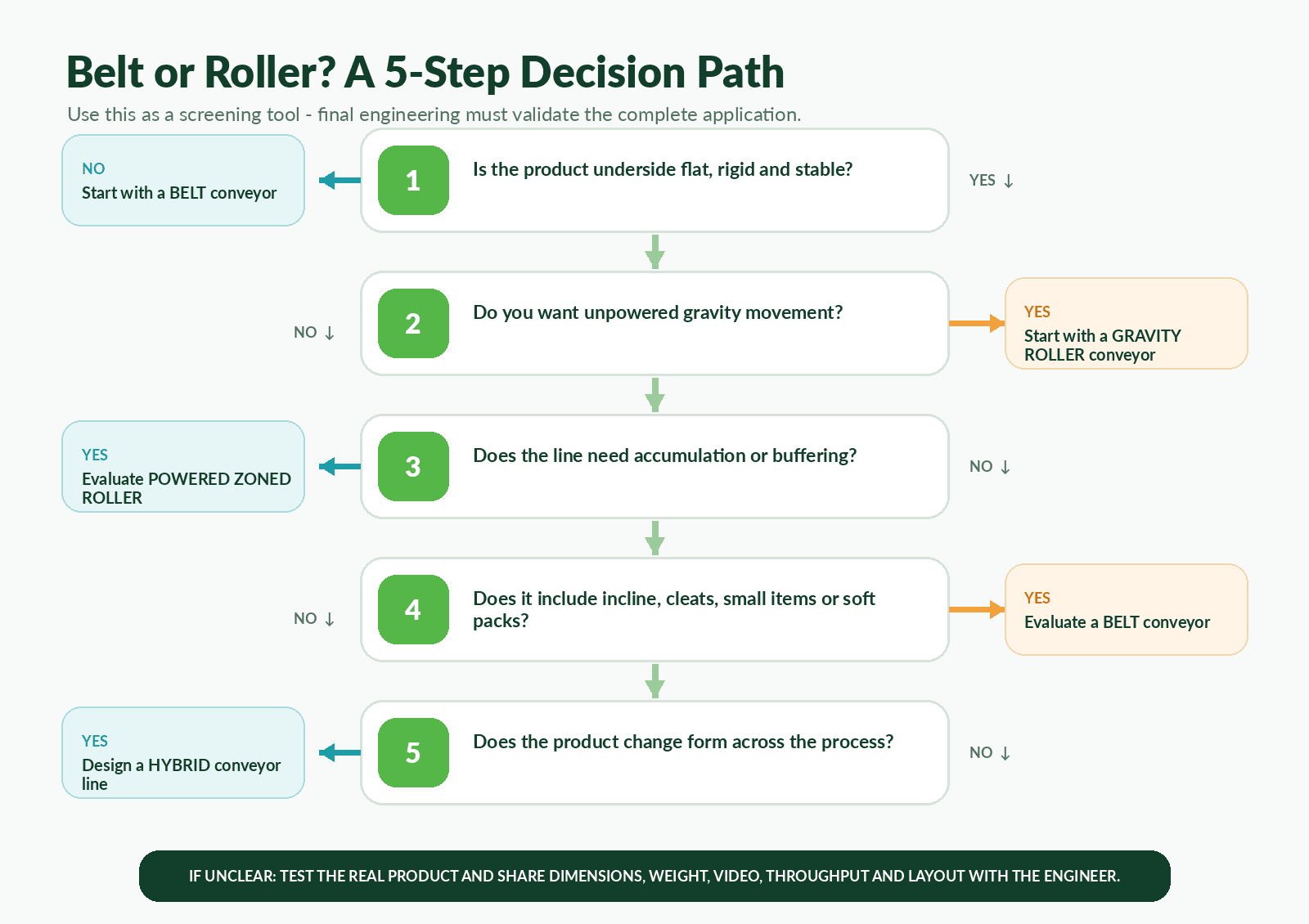
Figure 4. A screening decision path for belt, roller and hybrid conveyor selection.
1. Define the complete product range
Record minimum and maximum length, width, height and weight. Include the base shape, centre of gravity, surface, packaging material, temperature, fragility and any straps, seams or protrusions.
2. Define the process requirement
Specify throughput per minute or hour, speed, start-stop frequency, accumulation, spacing, scanning, inspection, assembly, operator interaction and upstream or downstream equipment.
3. Map the route
Provide conveyor length and width, elevations, incline angles, curves, transfer points, floor obstructions, access routes, maintenance clearances and available support locations.
4. Describe the environment
Confirm dust, moisture, washdown, oil, chemicals, heat, cold, corrosion, food-contact needs, cleanroom conditions and expected operating hours.
5. Define automation and safety
List available power, motor preference, variable-speed control, sensors, PLC interfaces, emergency stops, guards, interlocks, warning devices and safe maintenance access.
6. Compare lifecycle value
Review equipment cost, installation, energy, cleaning time, spares, expected downtime, product damage risk, future product changes and expansion options.
Common Conveyor Selection Mistakes
Choosing only from a per-metre price without comparing controls, supports, guards, transfers, installation and commissioning.
Using a roller conveyor for flexible packs without testing the smallest and lightest product.
Selecting roller pitch from the average carton instead of the shortest stable base in the product range. Ignoring the transfer gap between conveyor sections, machines, turntables, elevators or packing equipment. Adding accumulation after the mechanical design is finished instead of defining it at the start.
Assuming the lowest-maintenance option is universal without reviewing the plant’s cleaning method and spare-part capability.
Failing to plan for future product sizes, increased throughput or additional automation zones.
Treating guards, emergency stops and maintenance access as optional accessories rather than core engineering requirements.
Information to Share for an Accurate Conveyor Recommendation
A manufacturer can recommend the correct conveyor more accurately when the enquiry includes the operating requirement, not only a requested length and width. Share:
Product photographs and a short video showing how the product behaves when moved or stopped. Minimum and maximum dimensions, weight and base condition.
Required throughput, operating hours, speed and accumulation quantity.
Route drawing with conveyor length, width, elevations, curves and transfer points. Available power, controls, scanner or machine interfaces and preferred automation level. Operating environment, cleaning method, material preference and safety expectations. Plant location, installation constraints, shutdown window and commissioning responsibility.
Discuss your application with Convello
Convello designs belt, roller and hybrid conveyor solutions around product dimensions, weight, throughput, layout and automation requirements. Share the product data, site photographs or drawings and process video to receive a more relevant recommendation.
Request a Conveyor System Quote
Frequently Asked Questions
What is the main difference between a belt conveyor and a roller conveyor?
A belt conveyor provides a continuous moving surface. A roller conveyor uses separate rollers with gaps between them. The continuous surface is more forgiving for soft, small or irregular products, while rollers suit stable flat-bottom unit loads.
Which is cheaper: a belt conveyor or a roller conveyor?
A gravity roller conveyor is often the lowest-cost option for suitable products and simple routes. A basic powered belt may cost less than a zoned powered roller system. The correct comparison must include controls, supports, guards, installation, energy, maintenance and downtime.
Can a roller conveyor carry bags and pouches?
It may carry some rigid or well-filled bags, but flexible packs can sag into roller gaps or become unstable. A belt conveyor is normally the safer starting point. Product testing is recommended when the pack varies in fill, shape or stiffness.
Can a belt conveyor handle heavy loads?
Yes, when the belt, bed, pulleys, drive and frame are engineered for the duty. For pallets or concentrated heavy unit loads, a heavy-duty roller or dedicated pallet conveyor may be more practical.
Which conveyor needs less maintenance?
There is no universal winner. Belts require tracking, tension, cleaning and eventual replacement. Roller systems require attention to rollers, bearings, drive components, sensors and controls. Maintenance access and spare availability often matter more than the conveyor category.
Which conveyor is more energy efficient?
Gravity roller sections use no drive motor. Motor-driven roller zones can run on demand. Belt conveyor efficiency depends on friction, load, motor and controls. Compare the actual duty cycle instead of relying on a general claim.
Which conveyor is better for accumulation?
Powered zoned roller conveyor is usually the strongest starting point for carton or tote accumulation, particularly when zero-pressure control is required. Belt accumulation is possible but must manage sliding friction, back pressure and product sensitivity.
Can belt and roller conveyors be used in the same line?
Yes. Hybrid systems are common because the product and process change from one stage to another. Belt can handle soft packs or inclines, roller can manage cartons and accumulation, and a pallet conveyor can handle palletised loads.
How is roller spacing selected?
Roller pitch is selected from the smallest product base, load, roller diameter, required stability and manufacturer engineering rules. The product must remain supported by multiple rollers throughout the route and across transfer points.
Which conveyor is best for food processing?
For unpacked or soft food products, a hygienic belt design may be preferred. For sealed cartons or rigid trays, belt or roller can work. Material compatibility, washdown, drainage, contamination risk and sanitary access must be reviewed.
Final Takeaway
The correct answer to belt conveyor vs roller conveyor begins with the product, not the equipment catalogue. Choose a belt when the item needs continuous support, carries an irregular or flexible base, or must travel through an incline. Choose rollers when the load is rigid and flat-bottomed and the process benefits from gravity flow, curves, zoning or accumulation. Use a hybrid line when the product changes form across production, packing, warehousing and dispatch.
Before approving a quotation, test the smallest, lightest and most difficult product; confirm transfers and accumulation; and compare lifecycle cost rather than equipment price alone. A properly selected conveyor should improve material flow without creating new jams, cleaning delays, safety risks or maintenance bottlenecks.