+91 99980 88430 | +91 95589 17778
  info@convello.in | sales@convello.in
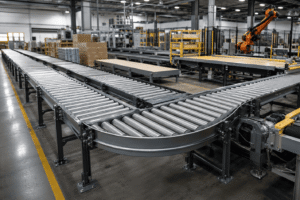
A practical buyer’s guide for factories, warehouses, logistics centres, packaging operations and automation projects.
Selecting a conveyor manufacturer in India can look straightforward until quotations begin to arrive. One supplier may recommend a belt conveyor, another may propose powered rollers, and a third may offer a lower-cost system with limited controls, guarding or installation support. The totals are easy to compare, but the engineering scope often is not.
A conveyor becomes part of the operating process. It affects product flow, labour movement, machine interfaces, ergonomics, safety, maintenance and future capacity. A poorly matched design can create unstable product transfer, recurring belt or roller problems, blocked access, excessive manual intervention and difficult spare-parts support. The right manufacturer should therefore be evaluated as an engineering and lifecycle partner, not only as a fabricator.
This guide explains how to choose a conveyor manufacturer in India using measurable evidence. It covers requirement definition, design capability, manufacturing quality, safety, controls, testing, installation, documentation, after-sales support, quotation comparison and total cost of ownership. The framework can be adapted for a single conveyor, a complete production line or a multi-zone warehouse automation project.
| Selection shortcut Define the operating result first. A strong manufacturer should be able to explain why the proposed conveyor type, dimensions, speed, components, controls and safety measures fit your product and process – and how that fit will be verified before handover. |
Why Choosing the Right Conveyor Manufacturer Matters
The purchase price is only one part of conveyor cost. Downtime, damaged products, recurring adjustments, unavailable spares, difficult cleaning, unsafe access and slow service can cost more than the initial saving from a low quotation. Conversely, a well-engineered conveyor can improve flow, reduce manual handling, support consistent throughput and make future integration easier.
Manufacturer selection also influences project risk. A conveyor project normally passes through requirement review, concept design, drawing approval, manufacturing, inspection, dispatch, installation, commissioning and acceptance. Weakness at any stage can affect the final result. A capable supplier should control the full sequence, identify assumptions early and document what is included, excluded and still awaiting approval.
Start With the Application, Not a Product Name
Before searching for a “belt conveyor manufacturer” or “roller conveyor manufacturer,” create a concise user requirement specification. The same document should be issued to every shortlisted supplier so that proposed solutions can be compared against the same operating need. Even when the buyer has a preferred conveyor type, manufacturers should be asked to validate whether it suits the product, route and duty.
| Requirement area | Information to define |
| Product | Dimensions, weight, material, underside, centre of gravity, fragility, temperature and variations |
| Performance | Normal and peak throughput, conveyor speed, accumulation, availability and future capacity |
| Route | Start and end points, length, width, height, curves, inclines, transfers, crossings and floor plan |
| Environment | Dust, washdown, moisture, corrosion, cleanability, noise, indoor/outdoor conditions and temperature |
| Automation | Sensors, PLC/HMI, VFD, barcode/RFID, WMS/MES, robots and upstream/downstream machine signals |
| Safety and access | Operators, maintenance zones, guarding, emergency stops, platforms, crossings and risk controls |
| Project conditions | Site location, access, utilities, shutdown window, documentation, validation, delivery and acceptance |
Photographs and a floor plan help, but they do not replace product data and performance targets. For complex projects, ask for a site survey and a structured technical discussion before expecting a final fixed quotation.
14 Criteria for Evaluating a Conveyor Manufacturer in India
1. Application Engineering and Requirement Review
The manufacturer should ask detailed questions before fixing the solution. Look for discussion of product stability, loading pattern, throughput, transfer points, accumulation, incline limits, maintenance access and operator interaction. A supplier that immediately quotes from only length and width is pricing a frame, not engineering the complete application.
2. Relevant Conveyor Range and Technology Fit
A broad product range is valuable when it is supported by real engineering capability. Belt, roller, slat-chain, pallet, telescopic, screw, spiral and assembly conveyors solve different problems. A manufacturer should select the technology around the application instead of forcing every enquiry into the one format it happens to produce most often.
3. Custom Design, Drawings and Calculations
Ask how the design is developed and approved. Depending on the project, useful evidence can include a concept layout, general arrangement drawing, load and speed calculations, motor sizing, roller pitch, belt specification, structural details, transfer geometry and interface drawings. The proposal should also show how future changes or expansion can be accommodated.
4. Manufacturing Capability and Component Transparency
Evaluate what is manufactured in-house, what is sourced and how quality is controlled. The quotation should identify important component makes or minimum specifications for the drive, gearbox, belt, rollers, bearings, sensors, PLC, HMI, VFD and electrical devices. Vague phrases such as “standard make” make lifecycle support and quote comparison difficult.
5. Quality Management, Inspection and Traceability
ISO 9001 certification can indicate that a company has a documented quality management system, but it should not be treated as proof that every proposed conveyor is suitable. Verify the certificate scope, site and validity, then ask for the project inspection plan, material or component records, welding and fabrication checks, alignment checks, electrical testing and final inspection documentation.
6. Safety Engineering and Applicable Standards
Safety should be built into the concept, not added after fabrication. Ask how the manufacturer identifies nip, shear, crush, entanglement, fall, electrical and unexpected-start hazards. Guarding, emergency stops, pull cords, interlocks, safe access, controlled restart and lockout provisions should be addressed according to the conveyor and site. Applicable Indian or international standards should be stated rather than assumed.
7. Controls and Automation Integration
For automated lines, mechanical design and controls must be developed together. Confirm the proposed operating philosophy, sensor logic, zone control, fault handling, HMI messages, VFD control, upstream/downstream handshakes and data interfaces. Ask who owns PLC software, whether source files are handed over, and how changes will be managed during commissioning.
8. Testing, FAT and Acceptance Criteria
Testing is useful only when the expected result is defined. Agree whether a factory acceptance test will use the actual product or a representative load, what throughput and run time will be demonstrated, which alarms and safety devices will be checked, and what records will be issued. Site acceptance should cover installed performance, interfaces, training and closure of outstanding items.
9. Installation and Commissioning Capability
Clarify whether the quote includes unloading, positioning, mechanical installation, electrical cabling, utilities, integration, trial runs and production support. Review the installation method, manpower, tools, supervision, safety documentation and site-readiness assumptions. A machine that performs well in the factory can still fail if alignment, anchoring, interfaces or commissioning are poorly controlled.
10. Documentation and Operator Training
A maintainable conveyor needs more than a general brochure. Request approved drawings, electrical schematics, I/O list, component list, operating manual, maintenance schedule, lubrication points, troubleshooting guide, recommended spares and warranty details. Training should cover normal operation, jams, cleaning, inspections, safe isolation, restart and escalation procedures.
11. After-Sales Service, Spares and Warranty
Ask where service engineers are located, how support requests are logged, what response target is offered and which parts are locally available. Identify critical spares before handover and confirm part numbers. Warranty terms should state coverage, exclusions, start date, response process and the treatment of third-party components instead of using only a generic “one-year warranty” sentence.
12. Project Management and Delivery Control
A credible delivery plan should include requirement freeze, drawing submission, buyer approval, procurement, fabrication, inspection, FAT, dispatch, site readiness, installation and SAT. Check who acts as the project manager, how progress is reported and how changes are approved. An aggressive delivery date is not valuable when it depends on unapproved assumptions or omitted activities.
13. Similar Project Evidence and References
Ask for projects that resemble your product, throughput, environment or integration level. Photographs alone do not prove performance; useful references explain the application, scope, challenges and operating result. For a high-risk project, request a customer reference, video demonstration or site visit, subject to confidentiality and safety rules.
14. Total Cost of Ownership and Commercial Clarity
Compare the complete lifecycle outcome rather than only the ex-works price. Include freight, installation, power consumption, consumables, expected wear parts, preventive maintenance, downtime risk, software access, spare availability and service travel. The strongest commercial offer is usually the one with a clear scope, measurable acceptance criteria and manageable operating cost – not automatically the lowest total on page one.
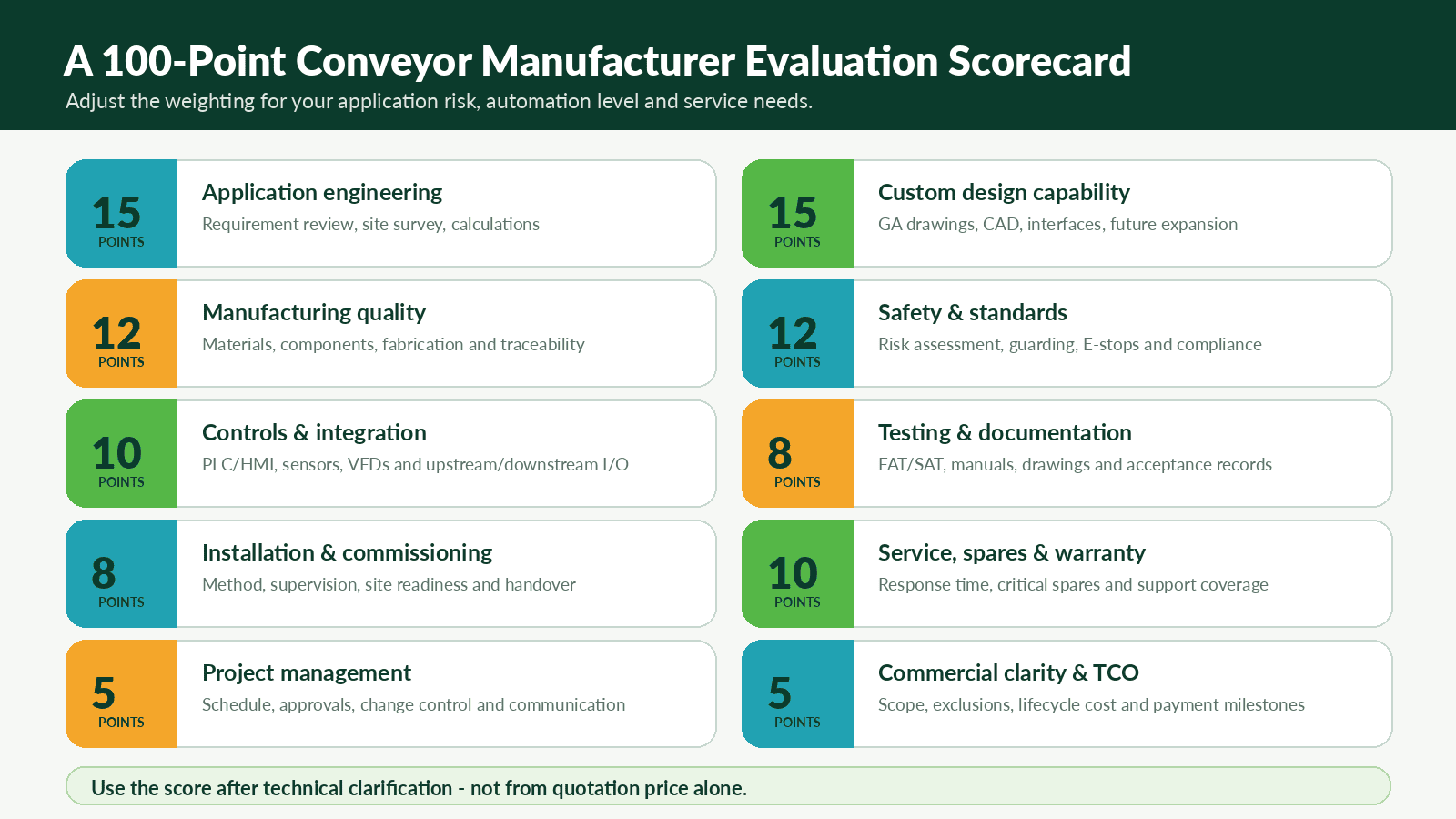
Figure 1. Suggested 100-point scorecard for evaluating shortlisted conveyor manufacturers.
Use a Weighted Manufacturer Scorecard
A weighted scorecard prevents one attractive feature – normally price or delivery – from dominating the decision. The following model totals 100 points and can be adjusted. For example, a simple gravity conveyor may place less weight on automation, while a high-speed distribution line may increase controls, testing and service weight.
| Evaluation area | Weight | Evidence to review |
| Application engineering | 15 | Requirement review, site survey, calculations and product trials |
| Custom design capability | 15 | Concept, GA drawing, interfaces, component selection and expansion plan |
| Manufacturing quality | 12 | Fabrication controls, inspection records, component specifications and traceability |
| Safety and standards | 12 | Risk review, guarding, E-stops, interlocks and applicable requirements |
| Controls and integration | 10 | Control philosophy, I/O, software ownership, alarms and interfaces |
| Testing and documentation | 8 | FAT/SAT plan, manuals, schematics, spares and training |
| Installation and commissioning | 8 | Method, supervision, site readiness, trial and handover |
| After-sales support | 10 | Response capability, service coverage, warranty and critical spares |
| Project management | 5 | Schedule, approvals, progress reporting and change control |
| Commercial clarity and TCO | 5 | Complete scope, exclusions, milestones and lifecycle cost |
| Scoring rule Score only after technical clarification and evidence review. Record assumptions and unresolved risks separately; a high numerical score should not hide a critical safety, performance or contractual gap. |
How to Compare Conveyor Quotations Like for Like
Conveyor quotations often use different boundaries. One may include controls, guarding and commissioning, while another excludes them. Before comparing price, create a compliance sheet showing whether each supplier includes, excludes or deviates from every requirement. Ask all bidders to update the same sheet after technical clarification.
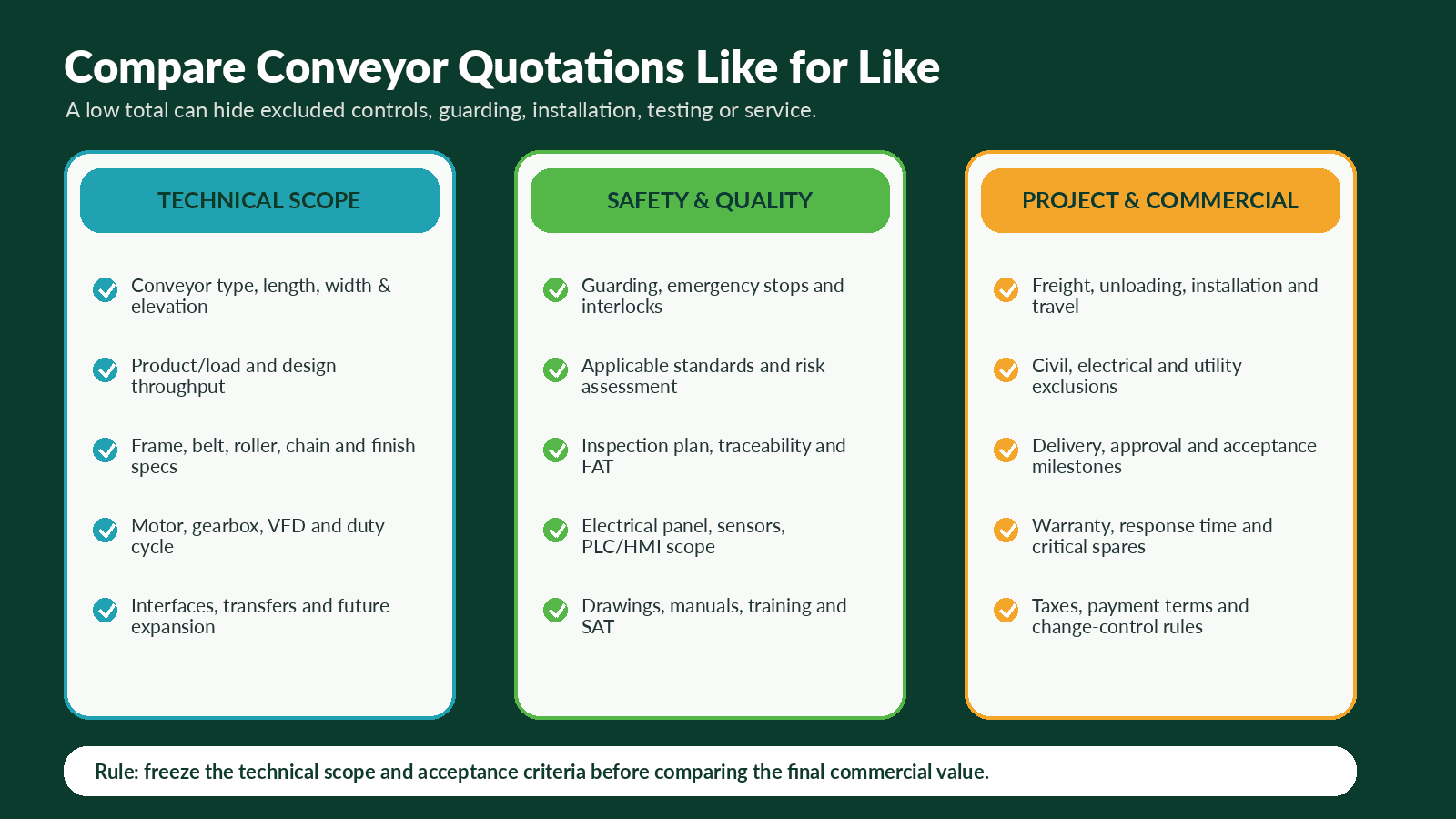
Figure 2. Technical, safety, quality and commercial details to compare across conveyor quotations.
| Comparison item | What to confirm |
| Mechanical scope | Type, dimensions, height, curves, transfers, supports, access, finish and load rating |
| Moving components | Belt/roller/chain type, pitch, material, speed, tensioning, tracking and wear parts |
| Drive and electrical | Motor, gearbox, VFD, panel, cable scope, voltage, IP rating and approved makes |
| Controls | PLC/HMI, sensors, logic, interfaces, software/source files, remote support and licences |
| Safety | Guards, E-stops, pull cords, interlocks, platforms, signage, risk review and restart logic |
| Project services | Design, drawings, FAT, packing, freight, unloading, installation, SAT and training |
| Documentation | Manuals, schematics, I/O, component list, inspection records, certificates and spares list |
| Commercial terms | Taxes, payment milestones, delivery basis, warranty, exclusions and change-control rates |
Standards and Certification: What Buyers Should Verify
Standards should be selected for the actual equipment and project. The Bureau of Indian Standards catalogue includes IS 11592:2000 for selection and design of belt conveyors and the IS 7155 conveyor safety series, including general safety and inspection/maintenance parts. International projects may also specify standards such as ISO 12100 for machinery risk assessment and IEC 60204-1 for electrical equipment of machines. Applicability depends on the conveyor type, site, industry, contract and current edition.
Ask the manufacturer to list the standards used in the proposal and identify any buyer-specific deviations. Do not rely on a logo or a general “as per standards” statement. Certification and standards can support confidence, but they do not replace application calculations, risk assessment, design approval, inspection and acceptance testing.
| Important standards note This article provides general procurement guidance, not a legal or engineering compliance determination. Confirm current statutory, customer, insurance and industry requirements with qualified professionals for the specific site and application. |
Application-Specific Checks for Different Conveyor Projects
Warehouse and e-commerce conveyors
Check carton, tote and polybag dimensions; peak rate; accumulation; scanning; sortation; rejection logic; fire and egress interfaces; WMS/WCS handshakes; maintenance access; noise; and recovery after a jam or power interruption.
Manufacturing and assembly lines
Review takt time, workstation sequence, ergonomics, fixture or pallet design, traceability, tools, inspection points, buffers, rework routing, line balance and integration with robots, testers, MES or existing machines.
Bulk-material and screw conveyors
Provide bulk density, particle size, moisture, flow characteristics, abrasiveness, temperature, contamination limits and required feed rate. Ask about wear, dust containment, seals, cleanout, blockage detection, access and safe maintenance.
Pallet and heavy-load conveyors
Confirm maximum and minimum pallet condition, load distribution, orientation, roller pitch, stopping accuracy, accumulation pressure, transfers, turntables, lift modules, forklift interaction and impact protection.
Truck and container loading conveyors
Define vehicle range, dock arrangement, loading pattern, extension, boom travel, operator position, parcel or bag type, wheel or rail movement, power cable management, controls, lighting, guarding and safe parking.
Food, pharma and clean applications
Specify product-contact expectations, materials, surface finish, cleanability, drainage, washdown chemicals, allergen or cross-contamination controls, hygienic access, component protection and the applicable regulatory or customer standards.
What Information Should You Send With the RFQ?
An accurate request for quotation reduces assumptions and protects the buyer from later scope additions. Use one structured data pack for every manufacturer and mark information that is provisional. Where possible, include actual product samples or representative loads for testing.
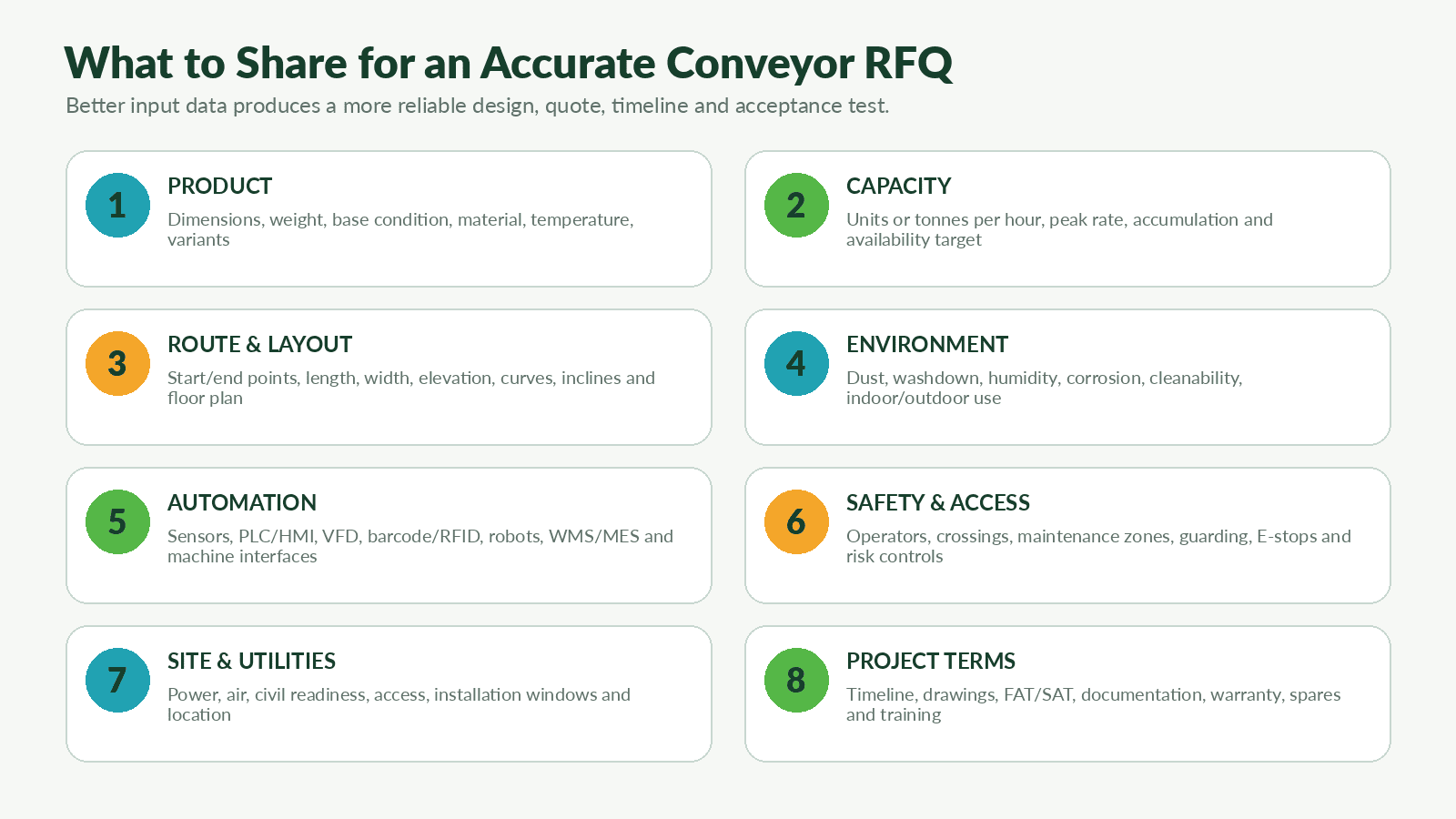
Figure 3. Eight information groups that improve conveyor quotation accuracy.
Product datasheet: dimensions, weight, material, base condition, fragility, temperature, centre of gravity and variants.
Performance: normal and peak throughput, speed, accumulation, operating hours, duty cycle, availability and growth allowance.
Layout: floor plan, photographs, elevations, route, curves, incline/decline, transfers, crossings, columns, doors and restricted access.
Environment: dust, moisture, washdown, corrosion, hygiene, noise, temperature, indoor/outdoor conditions and special hazards.
Controls and interfaces: sensors, PLC/HMI, VFD, data needs, barcode/RFID, robots, machines, WMS/MES and existing standards.
Safety and people: operator tasks, loading/unloading, maintenance access, pedestrian routes, guarding expectations and emergency response.
Site and utilities: location, voltage, compressed air, floor condition, civil work, unloading, installation window and production constraints.
Deliverables and terms: drawings, FAT/SAT, manuals, training, spares, warranty, delivery date, acceptance and preferred commercial format.
Questions to Ask Before Finalising a Manufacturer
| Question | Why it matters |
| Have you handled a similar product, throughput or environment? | Tests relevance rather than only general experience. |
| What data and site inputs do you still need? | Reveals whether the proposal is based on complete requirements. |
| Why is this conveyor type and configuration recommended? | Checks the engineering logic behind the concept. |
| Which components and makes are included? | Improves quality, maintainability and quote comparability. |
| Which standards and safety measures are included? | Clarifies risk controls and project compliance assumptions. |
| What will be tested at FAT and SAT? | Turns expected performance into measurable acceptance. |
| What is excluded from installation and integration? | Prevents hidden site, electrical and civil costs. |
| What documentation and software will be handed over? | Protects long-term maintenance and control-system access. |
| Which spares should we hold and what is the service response? | Measures operational support after warranty. |
| Can you share a relevant reference or demonstration? | Provides evidence of similar project capability. |
| How are changes, delays and deviations controlled? | Tests project-management maturity and commercial clarity. |
Red Flags When Selecting a Conveyor Supplier
A final quote is issued from only conveyor length and width, without product, rate, environment or interface data.
The supplier cannot explain why the selected conveyor type is suitable or what calculations and assumptions support it.
Key components are described only as “standard,” “equivalent” or “as available” without minimum specification or approval control.
Safety is treated as an optional accessory package after the base conveyor has been designed.
No drawing approval, FAT, SAT or measurable acceptance criteria are included.
The delivery promise is unusually short but excludes approval, component lead times, installation or site readiness.
Most payment is required before meaningful design approval, inspection or performance validation.
The supplier is unwilling to provide relevant evidence, documentation, warranty detail or a practical spare-parts plan.
The quoted value is far below alternatives because controls, guarding, freight, installation, cabling, integration or training are excluded.
Sales communication is strong, but no accountable application engineer, project manager or service contact is identified.
What Evidence Should Replace Verbal Assurances?
When a supplier makes an important claim, ask for proportionate evidence and record it in the technical evaluation. The goal is not paperwork for its own sake; it is to reduce uncertainty before design and fabrication are committed.
| Supplier claim | Useful evidence to request |
| We have done similar projects | Relevant reference, application description, product trial, FAT video or customer discussion |
| Our quality is controlled | Inspection plan, component list, approved makes, traceability records and final test format |
| We can meet the delivery date | Milestone schedule, drawing-approval dates, long-lead component plan and site-readiness assumptions |
| We provide strong after-sales support | Named escalation contacts, service coverage, response process, critical-spares list and lead times |
A 7-Step Conveyor Manufacturer Selection Process
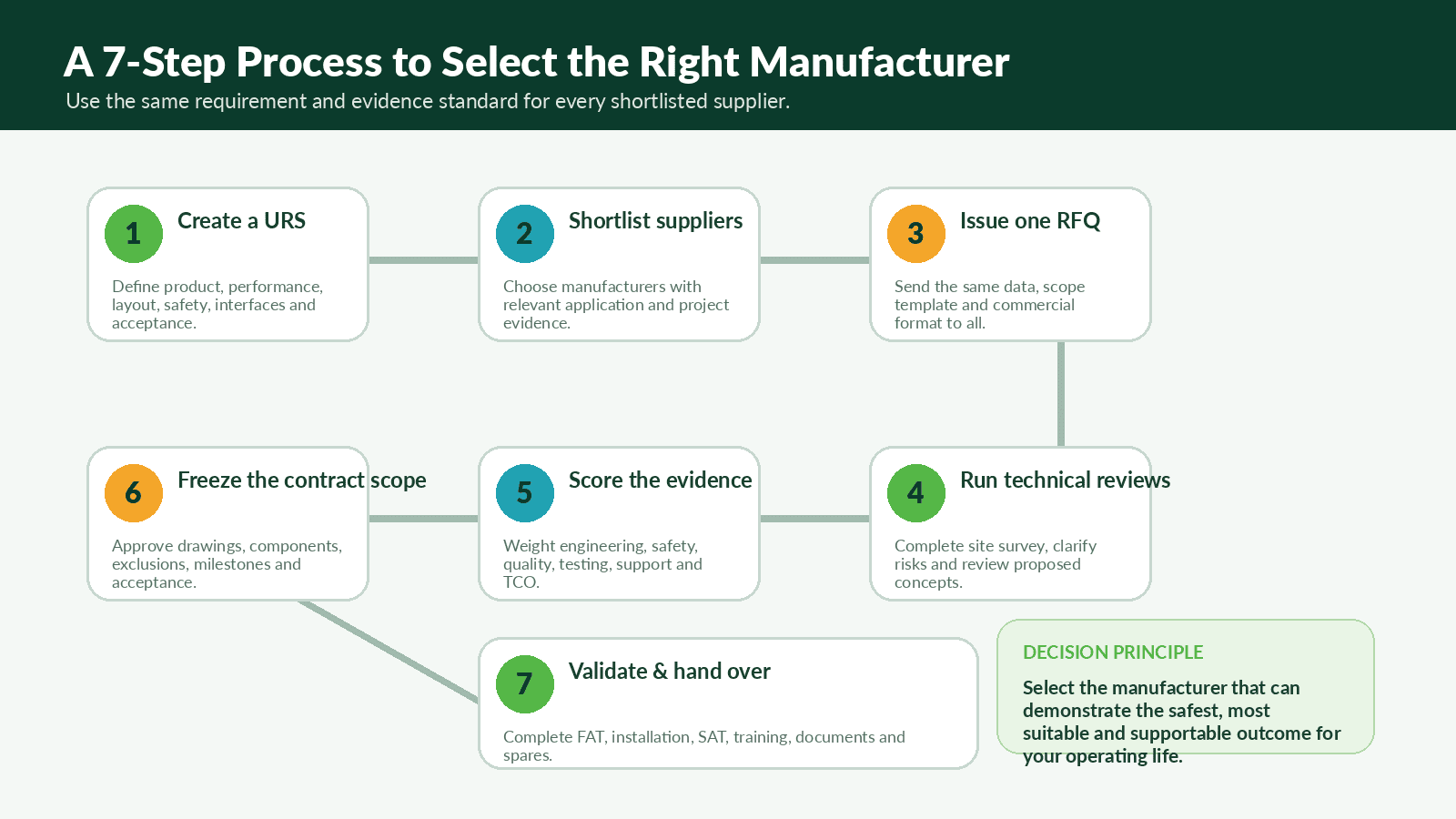
Figure 4. A controlled seven-step process from requirement definition to handover.
1. Create the user requirement specification
Define operating need, performance, layout, environment, safety, automation, documentation, support and acceptance. Separate mandatory requirements from preferences.
2. Shortlist three to five relevant manufacturers
Use product capability, similar-project evidence, service reach and engineering responsiveness. Do not shortlist only by web ranking or initial price indication.
3. Issue the same RFQ and compliance sheet
Provide identical information and ask each bidder to mark compliance, deviation, exclusion and assumption. Require a technical proposal separate from the commercial total.
4. Complete technical reviews and site survey
Clarify risks, inspect the route, review concept options, confirm interfaces and identify buyer responsibilities. Record open items with owners and dates.
5. Score evidence and lifecycle value
Apply the weighted scorecard after clarification. Evaluate critical risks separately and calculate the likely full project and operating cost.
6. Freeze scope before purchase order
Approve drawings or concept boundaries, component standards, safety, controls, testing, installation, exclusions, schedule, payment milestones, warranty and change procedure.
7. Validate, commission and hand over
Witness agreed FAT, verify site readiness, control installation, complete SAT, train operators and maintenance staff, receive documents/software/spares and close punch-list items.
Should You Choose the Nearest Conveyor Manufacturer?
Location can reduce travel time, freight and service delay, but proximity alone does not create application capability. A manufacturer in another state may be the better choice if it has stronger relevant engineering, testing and support. Evaluate PAN India service arrangements, local partners, remote diagnostics, spare availability and the planned response for critical breakdowns. For high-risk systems, include response expectations in the contract instead of relying on verbal assurances.
Why Consider Convello for Your Conveyor Requirement?
Convello designs and supplies industrial material-handling solutions across belt, roller, telescopic, assembly-line, screw, pallet, spiral, slat-chain, curve, flexible and other conveyor formats. Its project enquiry process asks for product, workflow, layout, load, throughput and automation information so that the proposed solution can be developed around the application rather than a standard catalogue size.
For a useful technical discussion, share product dimensions and weight, target throughput, route or floor plan, operating environment, automation interfaces, installation location and project timeline. Convello can then review the requirement and recommend an appropriate conveyor and integration approach.
| Discuss your conveyor application with Convello Request a custom conveyor system quote based on your product, workflow, facility layout, load capacity and automation requirements. Visit convello.in/contact/ to submit the project details. |
Frequently Asked Questions
How do I choose a reliable conveyor manufacturer in India?
Define the requirement, shortlist suppliers with relevant evidence, review engineering and safety, compare the same technical scope, agree FAT/SAT and acceptance criteria, and evaluate service and total lifecycle cost before award.
Is ISO 9001 certification enough to select a conveyor manufacturer?
No. ISO 9001 can support confidence in the manufacturer’s quality management system, but buyers should also verify application capability, design evidence, inspection, safety, testing, installation, documentation and service.
What details are needed for a conveyor quotation?
Provide product size and weight, throughput, route and elevations, environment, operating hours, controls, safety expectations, utilities, site location, installation scope, timeline, documentation and acceptance requirements.
How many manufacturers should I compare?
For most custom projects, three to five technically relevant suppliers provide enough comparison without making clarification unmanageable. A specialised or standard replacement purchase may justify a different approach.
Should I choose the lowest conveyor quotation?
Not automatically. First normalise scope, components, safety, controls, project services, testing, warranty and exclusions. Compare total cost of ownership and unresolved risk after technical equivalence is established.
What is FAT in a conveyor project?
Factory acceptance testing verifies agreed functions before dispatch. The plan may include product trials, throughput, controls, alarms, safety devices, run time and documentation, depending on the project.
What is SAT for a conveyor system?
Site acceptance testing confirms performance after installation and integration at the buyer’s facility. It should verify interfaces, installed operation, safety, training, documents and closure of outstanding items.
What warranty should a conveyor manufacturer provide?
Warranty duration varies. More important is a clear statement of covered equipment, exclusions, start date, response process, third-party component treatment, travel and labour terms, and buyer maintenance obligations.
How can I verify after-sales capability?
Ask for service locations, escalation contacts, response targets, remote-support method, engineer availability, critical-spares list, lead times and references from customers operating similar systems.
Which standards apply to conveyor systems in India?
The applicable requirements depend on the conveyor, industry and site. Buyers may need to consider relevant BIS conveyor design and safety standards plus project-specific machinery, electrical, fire, hygiene or customer standards. Confirm the current requirements with qualified professionals.
Can one manufacturer supply a complete automated conveyor line?
Yes, provided it can demonstrate mechanical, electrical and controls integration, project management, testing and support. Clarify whether the manufacturer owns the full scope or uses partners and who is accountable for system performance.
How long does a custom conveyor project take?
Lead time depends on design complexity, approvals, component availability, fabrication, testing, site readiness and installation. Ask for a milestone schedule rather than a single dispatch date.
Final Takeaway
The right conveyor manufacturer in India is not simply the company with the longest catalogue, nearest factory or lowest quotation. It is the supplier that can convert your operating requirement into a safe, maintainable and measurable system – then support that system through design approval, manufacturing, testing, installation and service.
Begin with complete application data, compare evidence using a weighted scorecard, normalise every quotation and freeze acceptance criteria before award. This disciplined process makes price comparison more meaningful and reduces the risk of costly changes after fabrication has started.