+91 99980 88430 | +91 95589 17778
 info@convello.in | sales@convello.in

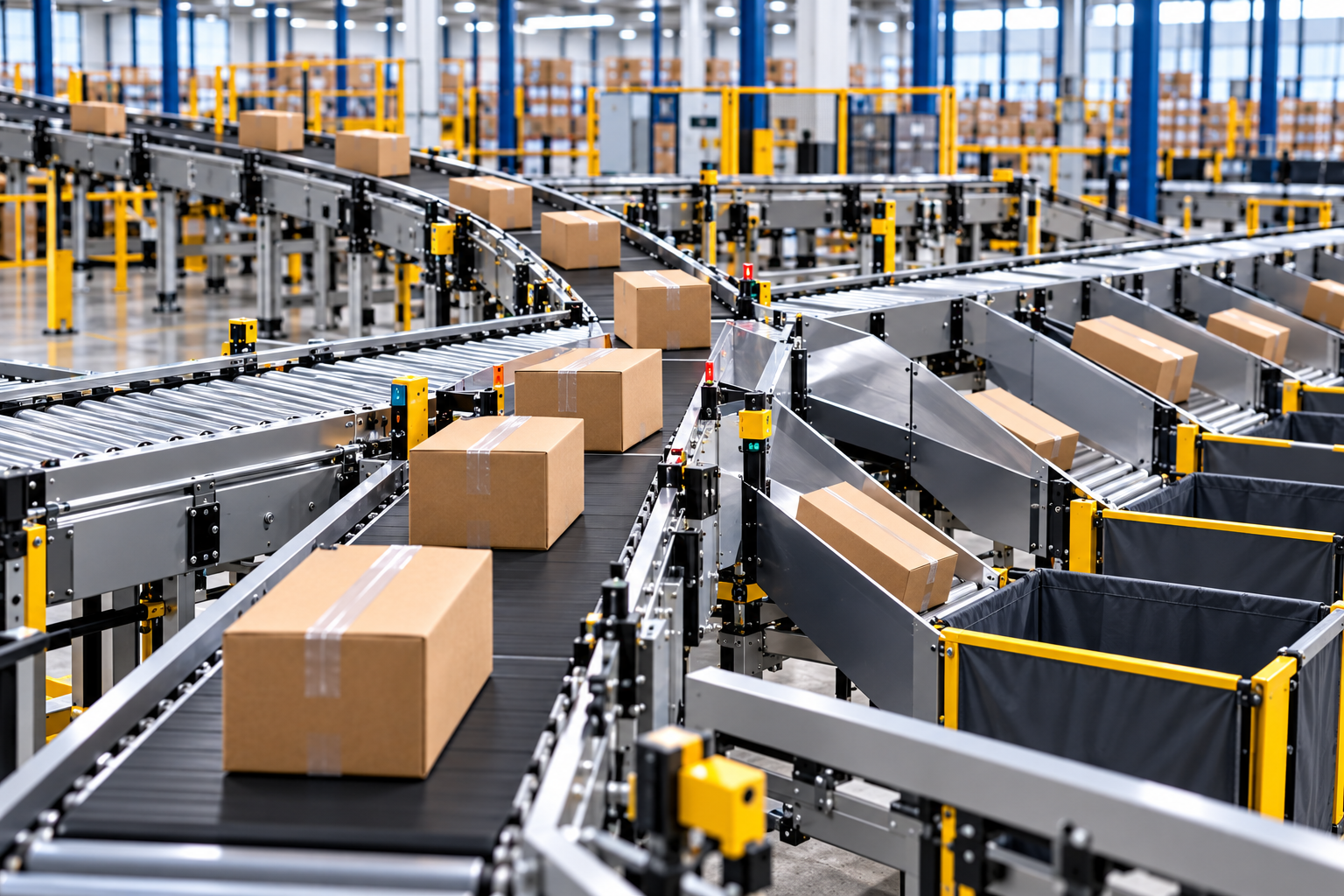
At 8:47 p.m., the final carrier cut-off is close enough for everyone in dispatch to feel it. Cartons are arriving from six packing stations, the scanner is reading most labels correctly, and three destination lanes are already more than half full.
One carton reaches the divert. Its label is readable and its destination is known, but the assigned lane has stopped because a trolley has not been changed. The control system holds the carton for a moment, then sends it to the exception lane. An operator checks the screen, confirms the reason and prevents the carton from disappearing into the wrong truck load.
Nothing in that moment looks dramatic. The sorter did not crash. No emergency stop was pressed. Yet the quality of the entire dispatch operation depended on a chain of small decisions: the carton entered alone, the barcode was still visible, the system knew where the carton was, the destination state was current, and the exception route was available.
This opening is an illustrative distribution-floor composite, not a claimed Convello customer event. It reflects a practical truth: a conveyor sortation system is not only a fast divert mechanism. It is a coordinated process that identifies a product, maintains its identity, creates the right spacing, checks the destination, routes it, confirms the hand-off and gives people a controlled way to recover what did not go normally.
| THE HUMAN TEST Ask the dispatch team where they wait, where they catch wrong cartons, which lanes fill first, which labels fail to scan, and what they do when the system is uncertain. Those answers often reveal the true sorter requirement faster than a catalogue. |
What Is a Conveyor Sortation System?
A conveyor sortation system is an automated material-handling arrangement that separates and routes unit loads to selected destinations. The load may be a corrugated carton, plastic tote, tray, parcel, polybag on a suitable carrier, case, crate or pallet. A complete system normally combines transport conveyor, accumulation, gapping or singulation, identification, tracking, control logic, one or more divert mechanisms, destination lanes and an exception route.
The term sorter is often used for the divert machine itself. Operationally, however, the sorter cannot perform reliably unless the upstream and downstream processes support it. A barcode scanner cannot identify a label hidden by another carton. A divert cannot send a carton into a lane that has no capacity. A warehouse control system cannot preserve sequence if products are manually removed and reintroduced without confirmation.
MHI describes sorters as equipment used to separate and route items, with activities such as merging, identifying, inducting and conveying to specific destinations. That broader description is useful because it keeps the project focused on the complete flow rather than the most visible machine.
The Difference Between Transport and Sortation
| Question | Transport conveyor | Sortation system |
| Primary job | Move a load from one point to another. | Decide and route each identified load to a selected destination. |
| Information needed | Product presence, permissives and zone status may be sufficient. | Identity, destination, tracking position, lane availability and confirmation are usually required. |
| Spacing | May allow close or zero-pressure accumulation. | Usually needs controlled induction pitch or a valid divert window. |
| Downstream logic | Stop or accumulate when blocked. | Select among destinations, handle full lanes and preserve exceptions. |
| Failure consequence | Delay or local queue. | Wrong shipment, missed truck, lost traceability or blocked system. |
How the Sortation Journey Works
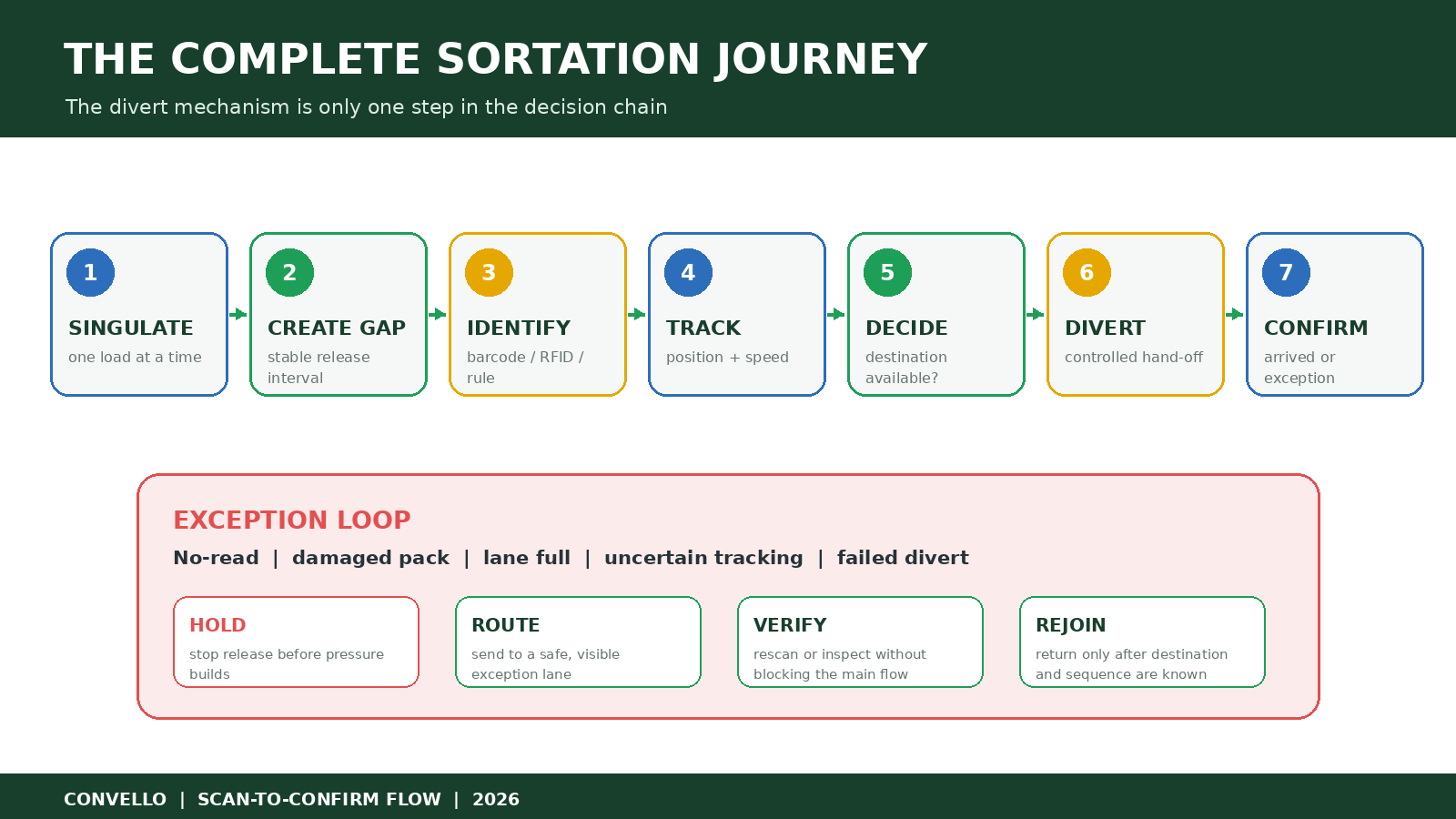
Figure 2. Reliable sortation follows a complete scan-to-confirm sequence and keeps a visible exception loop available.
1. Singulate the load
The system must know which physical item belongs to which digital record. Side-by-side cartons, touching parcels or an uncontrolled merge can cause one label to be associated with the wrong load.
2. Create a usable gap
The gap must give the scanner, tracking logic and divert enough time to act. More gap is not automatically better; excessive spacing wastes conveyor capacity and building length.
3. Identify the product
A barcode, 2D code, RFID tag, order rule or upstream message supplies the identity. The read station should be positioned where the product is stable and the label presentation is repeatable.
4. Track position and speed
The control system must know where the identified product is after the read point. Encoder pulses, sensors, zone logic or carrier tracking may be used. A product removed by hand can break this relationship unless the recovery process is defined.
5. Make the routing decision
The destination must be valid and available. The system may also consider lane fullness, truck sequence, route priority, product class, weight, hazardous incompatibility or a manual hold.
6. Execute the divert
Wheels, belts, rollers, shoes, pushers or crossbelts move the product into the selected path. The product must remain supported and stable through the hand-off.
7. Confirm or recover
A downstream sensor, lane count or system message confirms the result. A no-read, missed divert, full destination or uncertain track should enter a controlled exception process rather than being ignored.
| PRACTICAL RULE The sorter should never be the first place where the operation discovers that a label is unreadable, a carton is unstable or a destination has no space. |
Major Sorter Types and Where They Fit
Different mechanisms create different combinations of speed, floor-space use, product support, divert angle, noise, maintenance and cost. The categories below are planning families rather than interchangeable catalogue products.
| Sorter type | Typical strengths | Common limitations / checks |
| Pusher or simple side divert | Straightforward routing to a small number of destinations; suitable for robust products at modest rates. | Side impact, required stop or slow-down, product rotation and long divert centres. |
| Cross transfer / pop-up transfer | Compact 90-degree routing for stable cartons, totes, trays or pallets; useful at controlled intersections. | Cycle time, complete base support, product stop accuracy and lift/transfer maintenance. |
| Pop-up or pivot-wheel sorter | Angled diversion with close spur centres; practical for many stable cartons and parcels at medium rates. | Soft or sagging bases, damaged cartons, wheel contact, label orientation and divert testing. |
| Narrow-belt sorter | Multiple narrow belts with pop-up rollers for 30- or 90-degree transfers; compact and precise. | Minimum product base, transfer roller spacing, flexible packs and small product support. |
| Sliding-shoe sorter | High throughput, many destinations and generally gentle steering of cartons across the sorter surface. | Longer machine, project cost, induction quality, shoe/slat maintenance and destination design. |
| Crossbelt sorter | High product variety, many destinations, compact destination arrangements and very high rates. | Quality of induction, carrier loading, controls complexity, footprint and specialised service capability. |
| Tilt-tray or carrier sorter | Useful for diverse small parcels and many chutes when products can be inducted onto individual carriers. | Product containment, tray loading, destination design and suitability for the item mix. |
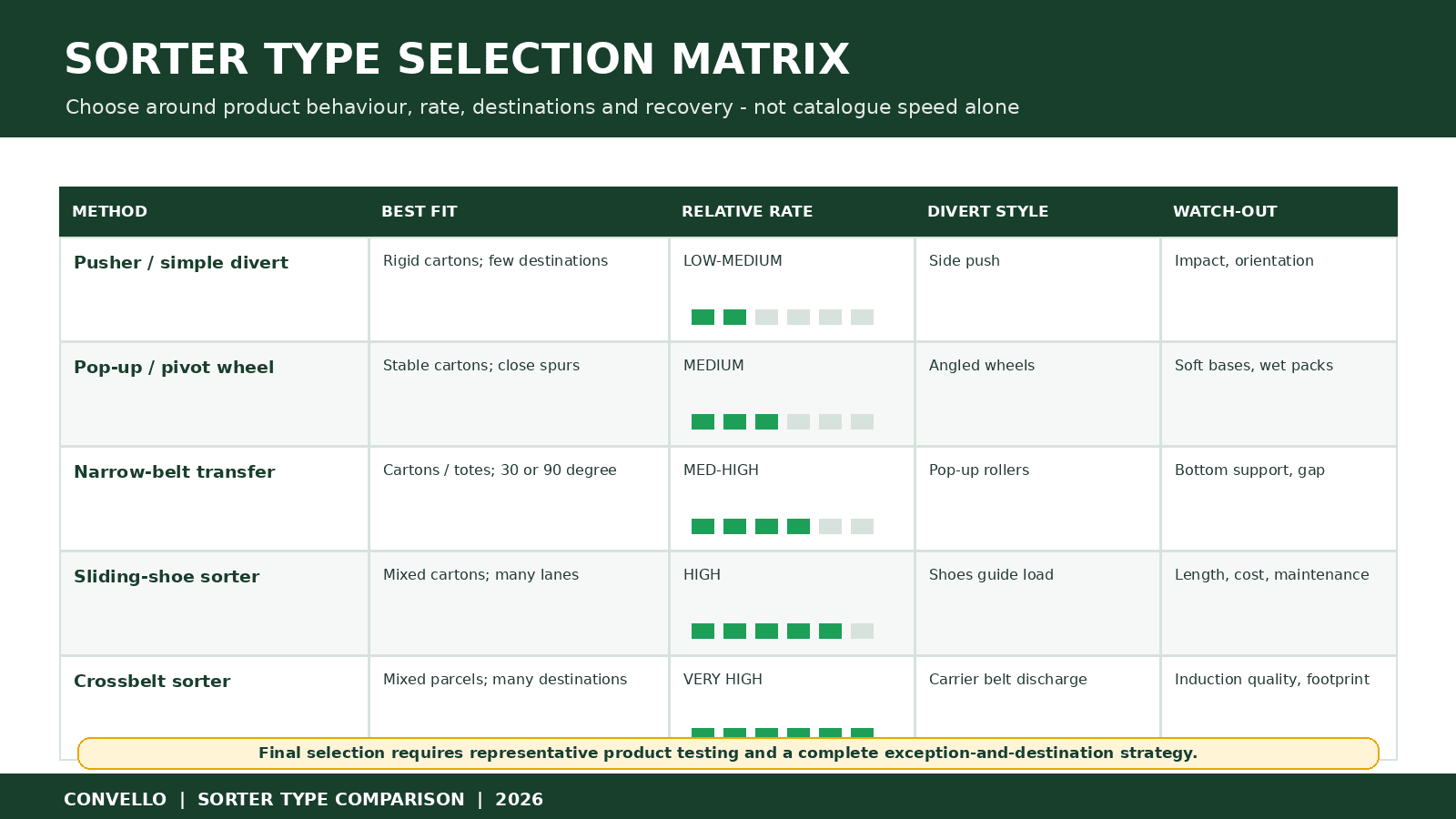
Figure 3. A sorter comparison is useful only when it is checked against the real product mix and exception process.
15 Decisions That Determine Whether the Sorter Works
1. Define the complete product envelope
Record minimum and maximum length, width, height, weight and base shape. Include damaged but still accepted cartons, bowed bases, straps, labels, overhang and seasonal packaging.
2. Test the least cooperative product
The smallest pack, softest polybag, tallest unstable carton or worst label position often defines the system limit. Do not test only clean sample boxes supplied for the demonstration.
3. Separate average, sustained peak and burst rate
A four-hour average can hide a 15-minute wave that overloads induction, the scanner, the sorter or destination lanes. Record how long each peak lasts and how the system recovers.
4. Measure the release interval
At 40 items per minute, a new product must be released on average every 1.5 seconds. That interval has to include identification, tracking and a valid divert opportunity.
5. Engineer the induction and merge
The sorter cannot correct overlapping or uncertain product identity. Gapping conveyors, metering belts, merge logic and release priorities are often as important as the divert mechanism.
6. Validate identification under real conditions
Test all label locations, glossy films, damaged labels, varying heights, low contrast, quiet zones and any required multi-side read. Define what happens when the read confidence is insufficient.
7. Decide whether orientation must be preserved
Some products may rotate during a 90-degree transfer or side divert. Confirm which face must lead at packing, scanning, robotic handling or truck loading.
8. Design each destination as a process
A lane needs physical capacity, take-away capacity, safe access, product containment, status sensing and an owner. A destination that cannot be cleared becomes a system-wide constraint.
9. Write lane-full behaviour
The system may hold, recirculate, select an alternate destination, reduce release rate or route to exception. The response should be defined before controls programming begins.
10. Provide a no-read and exception route
No-read products should remain visible and traceable. The route must be easy to reach without crossing moving equipment or blocking normal destinations.
11. Clarify WMS, WCS and PLC responsibilities
Write in plain language which system creates the destination, tracks the product, checks lane availability, controls the divert, confirms arrival and owns recovery after a communication failure.
12. Design for safe recovery
Guard the mechanism and prevent access to hazardous motion, but also provide practical access for cleaning, jam investigation, isolation, reset and restart. Safety functions require project-specific risk assessment.
13. Reserve maintenance access
Shoes, rollers, belts, scanners, encoders, sensors and drives must be inspectable and replaceable. A fast sorter with poor service access can lose more time during faults than it saves during normal running.
14. Test noise and worker interaction
Induction and destination stations may be occupied for an entire shift. Noise, reach, chute height, full-container changeover and visibility affect both performance and employee acceptance.
15. Plan growth by destination and by rate
Future volume may need more induction capacity, longer lanes, extra destinations, higher take-away capacity or different software rules. Reserve both physical and control-system expansion space.
Useful Concept-Stage Calculations
| Calculation | Formula | Illustrative meaning |
| Average release interval | 60 / items per minute | At 40 items/min, average release interval = 1.5 seconds. |
| Product pitch | Conveyor speed × release interval | At 0.60 m/s and 1.5 seconds, pitch = 0.90 m. |
| Available gap | Pitch – product length | For a 0.50 m carton, illustrative gap = 0.40 m. |
| Lane backlog | Arrival rate × blocked time | At 12 cartons/min to one lane for 2 minutes, backlog = 24 cartons. |
| Exception volume | Total items × exception rate | At 8,000 items and 0.4%, the team still handles 32 exceptions. |
| WHY 99.6% IS NOT THE END OF THE DISCUSSION At 10,000 items, a 99.6% successful normal-flow rate still creates 40 products that need a safe, traceable and adequately staffed recovery process. |
Real Project: Eder-Goodman Doubled Distribution Throughput
A current public case study published by Hytrol in September 2026 shows why a sorter project must be designed as a complete operating system. Eder-Goodman, a wine and spirits distributor, was consolidating three distribution operations into a single facility while maintaining the overnight fulfilment cycle needed for next-day delivery.
The project could not simply stop the old operation and wait for the new one. Conveyor Handling Company designed the installation so that the legacy flow could continue while the new system was built. Hytrol reports that one line was temporarily rerouted to make room for the new pick module while trucks continued to be loaded.
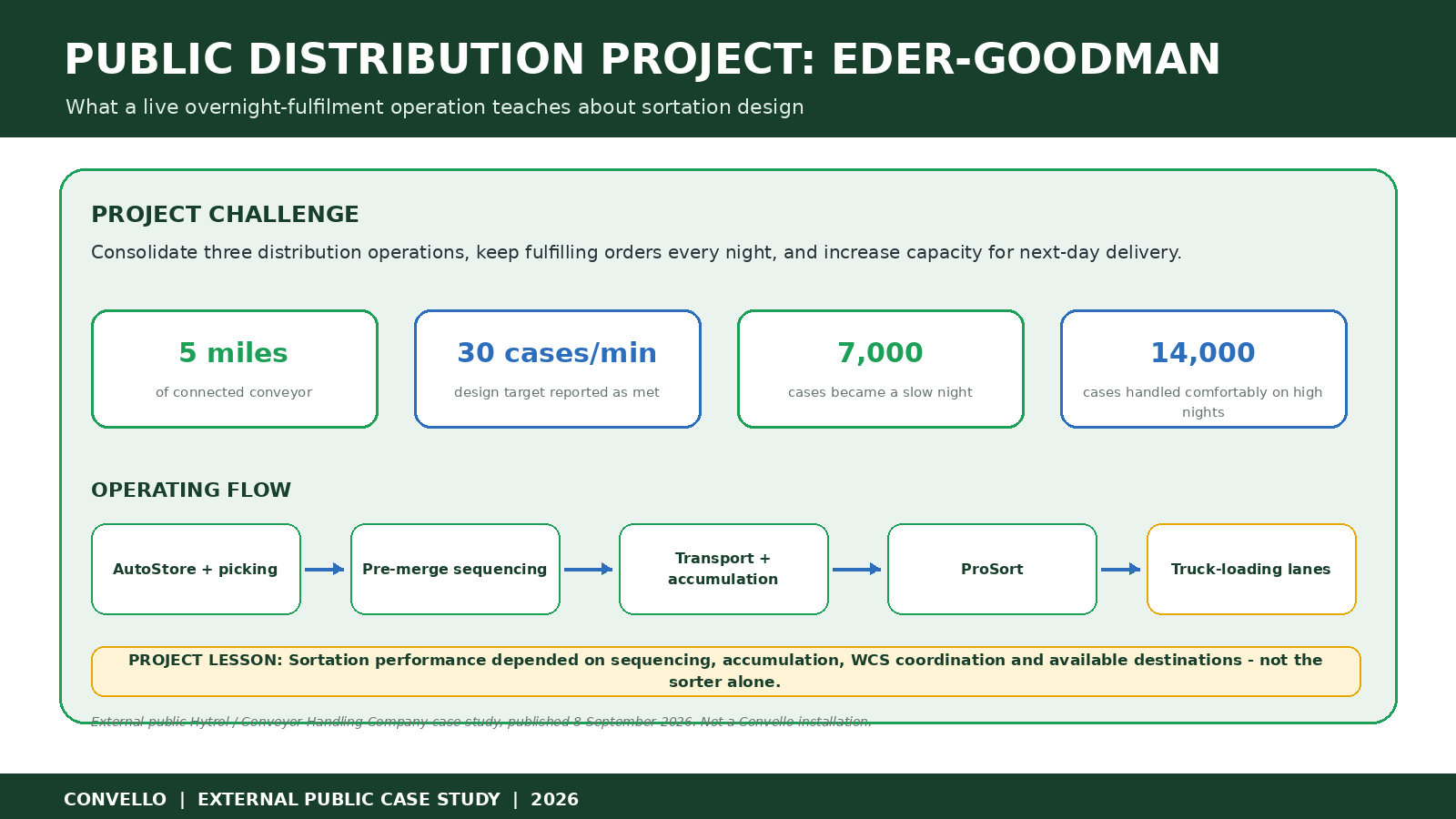
Figure 4. Eder-Goodman shows how sortation, accumulation, controls and phased installation work as one live operating project.
The final system connected approximately five miles of conveyor with a two-level pick module, accumulation, a ProSort 1431 sorter, warehouse controls and AutoStore integration. Orders were released in waves to both AutoStore and conveyor picking. The streams merged before travelling through transportation and accumulation conveyor to a mezzanine sortation area, where products were directed to truck-loading locations.
Hytrol reports that the system was designed around a 30-case-per-minute goal and was meeting it. The warehouse manager described 7,000 cases as a major night before the project; after implementation, that became a slow night, while the operation could handle up to 14,000 cases comfortably. The published case study describes the result as doubled throughput.
Those numbers belong only to the reported Eder-Goodman project. They are not a Convello result and should not be reused as a promise. Their value is in the project lessons.
| Project lesson | Why it matters for another sorter project |
| Sequence was managed before the sorter | The pre-merge and wave logic kept products in the intended release order. A high-speed divert cannot repair uncontrolled induction. |
| WCS coordinated multiple areas | AutoStore, picking, transport, accumulation and sortation needed one agreed routing process. |
| Destinations were linked to truck loading | The sorter was designed around the operational endpoint, not around a machine in isolation. |
| Installation protected live fulfilment | Phasing and temporary routes were part of the engineering scope. |
| Capacity included future growth | The project created more than a one-season fix and provided headroom for increasing volume. |
| CASE-STUDY DISCLOSURE External public Hytrol / Conveyor Handling Company project. Not a Convello installation. Source checked 16 October 2026. |
Illustrative Indian Distribution Project
Consider an Indian consumer-goods distributor preparing 5,200 cartons during a four-hour evening dispatch window. The average flow is about 22 cartons per minute, but the last 45 minutes regularly reach 36 cartons per minute. Products must be routed to eight carrier or route destinations, and the team currently hand-sorts cartons after packing.
This is an illustrative project brief, not a claimed Convello customer result. It shows how the requirement could be converted into a system concept.
| Observed issue | Design response to evaluate |
| Cartons arrive from six packing stations in uneven waves. | Meter the merge and create a controlled pre-sort accumulation zone rather than releasing all stations at once. |
| Labels appear on top or one side. | Validate the scan tunnel with the complete height and label-position range; provide no-read routing. |
| Peak demand is 36 cartons/min. | Use the sustained peak for induction and divert checks; 60/36 gives an average 1.67-second release interval. |
| Eight destinations fill at different rates. | Sense lane capacity, define lane-full logic and provide a visible exception destination. |
| Some flexible mailers are mixed with cartons. | Test them separately; use a belt-supported path, tray or alternative handling method if the selected sorter cannot support the base. |
| Cut-off pressure encourages manual bypasses. | Design a controlled recovery workstation that can rescan, relabel and rejoin products without breaking tracking. |
At 36 cartons per minute, a 90-second stop in one heavily used downstream lane can create a theoretical arrival of 54 cartons if routing cannot be changed. The correct response may be alternate routing, upstream throttling, recirculation or buffer capacity; simply building a 54-carton lane may not be the most economical or safest answer. The project team should test the actual destination mix and recovery time.
Controls: The Sorter Needs Clear States, Not Clever Guessing
A robust control description should name the states that operators and technicians actually see. Typical states include ready, running, starved, blocked, destination full, no-read, tracking uncertain, divert fault, communication lost, manual recovery and safe stop. Each state should have an owner and an expected response.
| Event | System response to define | Human response to define |
| Barcode not read | Route to no-read or stop release according to risk. | Inspect, rescan, relabel or verify order. |
| Destination full | Hold, select alternate lane, recirculate or slow release. | Clear lane, replace trolley/pallet and confirm capacity. |
| Missed divert | Detect downstream mismatch and isolate the product. | Recover without climbing into moving equipment or losing identity. |
| WCS communication lost | Move to a predefined degraded or stopped mode. | Confirm system status and follow authorised recovery procedure. |
| Product removed manually | Invalidate or reconcile tracking record. | Use defined station and scan action before reintroduction. |
| Emergency stop / guard open | Safe stop with controlled restart conditions. | Inspect area, remove cause, authorise reset and verify first products. |
When a High-Speed Sorter Is Not the Right First Investment
Some operations need better process discipline before they need a faster sorter. A high-speed system may be the wrong first move when packaging dimensions change without control, labels are frequently missing, destination ownership is unclear, volume is highly intermittent, take-away lanes are manually constrained, or a single packing or scanning station is already the real bottleneck.
In those cases, the first phase might be a powered roller line, accumulation, barcode verification, several PLC-controlled cross transfers or pivot-wheel diverts, and a well-designed exception station. A modular system that solves the present routing problem can be more valuable than a machine selected for a future peak that the surrounding operation cannot support.
Nine-Step Selection and Implementation Roadmap
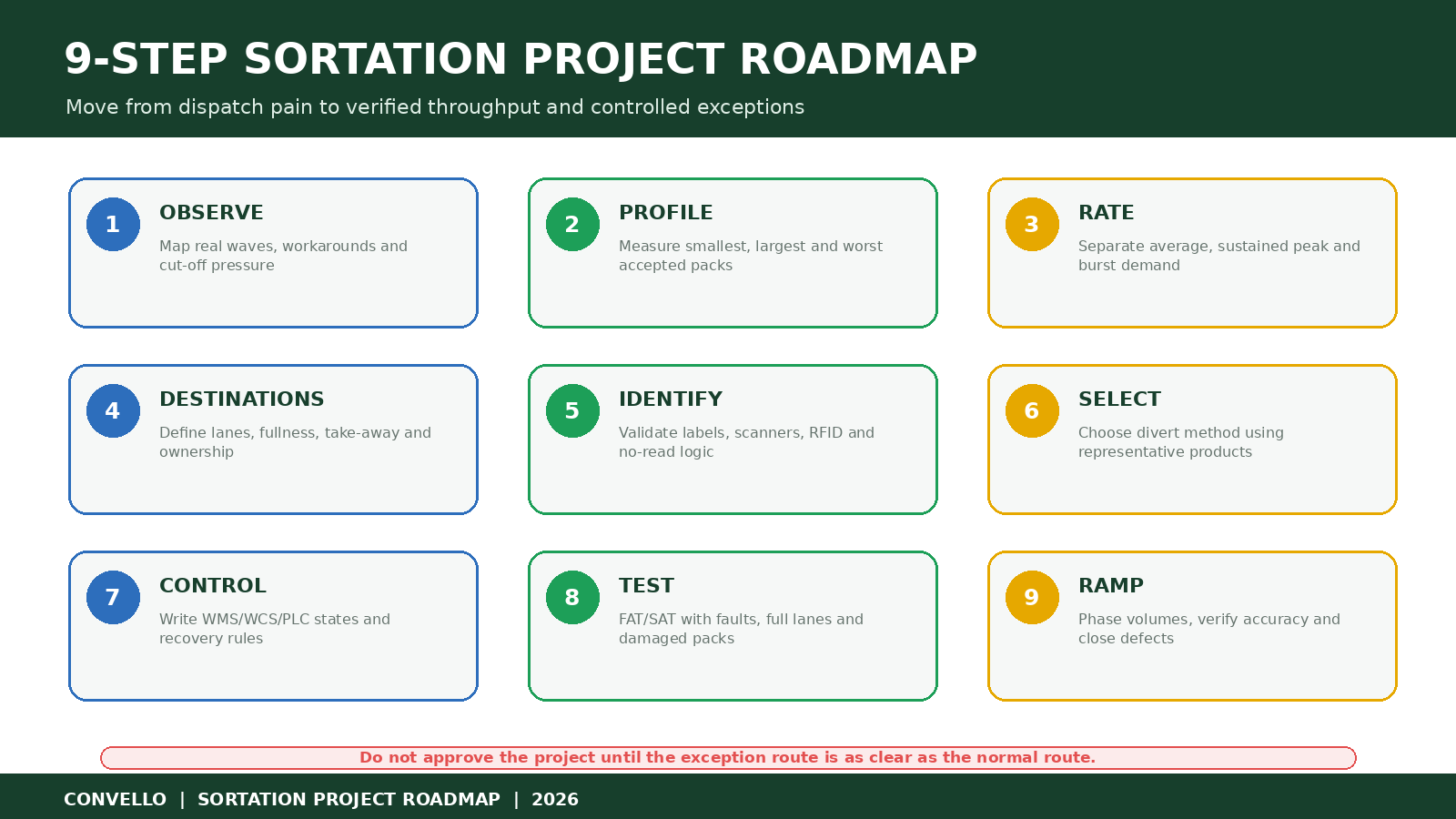
Figure 5. A sorter project should progress from observed flow and product evidence to verified controls, testing and staged ramp-up.
- Observe actual dispatch waves, lane changes, operator workarounds and missed-cut-off events.
- Profile every accepted product, including weak cartons, soft packs, reflective film and unusual label positions.
- Measure average, sustained peak, short burst, exception rate and downstream recovery capacity.
- Define each destination, capacity, take-away method, full-state signal and operational owner.
- Validate identification, tracking and no-read behaviour using representative production samples.
- Shortlist sorter mechanisms and run product trials at realistic rate, gap and lane conditions.
- Write WMS, WCS, PLC, scanner and safety responsibilities in plain language.
- Run FAT and SAT with blocked lanes, no-reads, power recovery, missed diverts and maintenance access.
- Ramp volume in controlled stages, compare results with acceptance criteria and close the punch list.
Information to Share for an Accurate Sortation Proposal
| Requirement group | Information to provide |
| Products | Minimum/maximum dimensions and weight, base condition, packaging material, photos/video, label locations, fragile or unstable items. |
| Flow | Average, sustained peak, burst duration, waves, operating hours, current exceptions and required future capacity. |
| Routing | Number of destinations, route rules, divert angle, orientation, lane sequence and alternate-destination logic. |
| Identification | Barcode types, RFID, label quality, scanner positions, WMS destination message and no-read rule. |
| Layout | CAD, columns, levels, walkways, fire routes, available length, maintenance zones and vehicle interfaces. |
| Controls | Existing PLC/HMI/WMS/WCS, network responsibility, data fields, confirmations, alarm ownership and cybersecurity requirements. |
| Destinations | Lane capacity, trolley/pallet change, take-away rate, full sensors, ergonomic access and truck-loading sequence. |
| Safety and service | Risk requirements, guarding, emergency stops, isolation, cleaning, spares, documentation and training. |
| Acceptance | Products for testing, target rate, accuracy definition, availability window, recovery tests and handover evidence. |
Common Sortation Project Mistakes
- Buying from catalogue throughput without checking the sustained induction rate and destination take-away capacity.
- Testing only perfect cartons and excluding soft, small, damaged or reflective packages.
- Scanning after an unstable transfer or too close to the divert for reliable tracking.
- Treating the no-read lane as leftover space rather than a staffed and measurable process.
- Allowing the WMS, WCS and PLC suppliers to assume someone else owns a critical decision.
- Ignoring full-lane, missed-divert, communication-loss and manual-removal scenarios.
- Providing destinations with insufficient capacity or difficult trolley/pallet replacement.
- Hiding chronic process faults behind excessive accumulation.
- Reducing maintenance access to fit more lanes into the drawing.
- Installing the complete system at once without a safe migration and ramp-up plan.
- Defining accuracy without stating whether no-reads and recirculated products count as success.
- Leaving no space, I/O or software capacity for future destinations and volume.
Frequently Asked Questions
What is a conveyor sortation system?
It is an automated arrangement that identifies, tracks and routes unit loads to selected destinations using conveyors, controls, sensors and divert mechanisms.
What is the difference between a conveyor and a sorter?
A transport conveyor primarily moves a load. A sorter makes an item-specific routing decision and sends the identified load to one of several destinations.
Which sorter is best for cartons?
Stable cartons may suit pivot-wheel, narrow-belt, sliding-shoe, cross-transfer or crossbelt systems. The correct option depends on size range, base quality, rate, destinations, angle and available space.
Can a sorter handle polybags?
Some systems can, but sagging, flexible or low-friction packs need representative testing and may require continuous belt support, a tray or a sorter specifically designed for polybags.
How fast can a sortation system run?
There is no universal rate. Capacity is limited by induction, identification, product pitch, tracking, divert cycle, destination availability and downstream take-away – not only the mechanical sorter speed.
Does every sorter need a WCS?
Small systems may be controlled directly by a PLC with simple destination rules. Complex multi-area systems often use a WCS or WES to coordinate routing, waves, priorities and exceptions. Responsibilities must be explicit.
What happens when a barcode cannot be read?
The product should follow a predefined no-read process, usually a safe exception lane or controlled hold where it can be rescanned or verified without losing identity.
Can sortation be added to an existing conveyor line?
Often yes, but the existing product spacing, conveyor speed, frame, controls, layout, power, network and shutdown window must be surveyed. A retrofit may require new gapping, accumulation and destination sections.
How many destinations can a sorter support?
The number depends on sorter architecture, building geometry, required rate, destination design and controls. More destinations can reduce spacing and increase software, access and take-away complexity.
How is sortation accuracy measured?
Define the numerator and denominator: correctly delivered first-pass items, recovered no-reads, recirculated items, manual corrections and wrong-lane events should not be mixed without explanation.
What safety features are required?
Requirements depend on the project risk assessment. Typical considerations include guarding, access control, emergency stops, safe isolation, jam recovery, controlled restart and protection at diverts, drives and destinations.
What should I send a conveyor manufacturer for a quote?
Share the complete product range, rates, destination rules, layout, label data, controls interfaces, lane capacities, operating hours, safety requirements, test criteria and future-growth assumptions.
Conclusion: Design the Decision Chain, Not Only the Divert
A conveyor sortation system creates value when it protects the complete journey from identity to destination. The best project is not necessarily the machine with the highest catalogue rate. It is the system that handles the real product mix, survives peak waves, keeps destinations available, makes exceptions visible, gives technicians safe access and remains understandable to the people who operate it at the end of a demanding shift.
The Eder-Goodman project demonstrates this system view: sequencing, accumulation, warehouse controls, sortation, truck-loading destinations and phased installation worked together. For a new warehouse or retrofit, begin with the actual flow and the exception process. The sorter type becomes clearer once those facts are known.